.webp)
Over the last decade, sales prospecting has undergone a massive transformation.
Not long ago, most sales representatives spent a large portion of their day performing manual tasks such as:
- Researching companies to target
- Searching for decisiSearching for decision-makers contact information into spreadsheets
- Sending cold emails individually
This approach worked because outbound sales operated on a smaller scale.
A typical salesperson would:
- Build a list of 50 prospects
- Send personalized outreach emSend personalized outreach emailsly
- Convert a few leads into sales meetings
But today’s B2B sales environment has changed fundamentally.
Modern sales teams are now expected to:
- Identify high-value accounts quickly
- Reach prospects across multiple channels
- Personalize communication at scale
- Monitor prospect engagement in real time
- Maintain accurate CRM data
- Generate predictable pipeline
Executing all these tasks manually is no longer feasible.
With the explosion of available business data and increasingly complex buying cycles, companies are turning to prospecting automation to build scalable pipeline generation systems.
Today, organizations can use automation tools to:
- Discover potential leads
- Enrich contact data
- Identify buyer intent signals
- Launch personalized outreach campaigns
- Track engagement across channels
The result is a fundamental shift in how modern sales organizations operate.
Sales representatives can now focus less on research and manual data entry and more on high-value activities such as:
- Running discovery calls
- Building relationships
- Closing deals
What This Guide Will Cover
In this guide, we will explore:
- What prospecting automation actually means
- Why automation is critical for modern B2B sales teams
- Tools powering modern prospecting systems
- The complete prospecting automation stack
- What leading revenue teams are doing differently
- The future of AI-driven outbound sales
By the end of this guide, you will understand how modern companies transform outbound sales into scalable revenue engines using automation.
| Stack Layer | Primary Function | Key Capability | Manual Equivalent |
|---|---|---|---|
| Data Discovery Platforms | Build targeted prospect lists at scale | Firmographic & technographic filtering | Researching companies one by one |
| Contact Enrichment Tools | Fill gaps in contact & account data | Waterfall enrichment across multiple sources | Copying data into spreadsheets manually |
| Intent Signal Platforms | Identify high-intent buyers in-market now | Behavioral & third-party buying signals | Guessing timing based on deal stage |
| Outreach Automation Platforms | Run multi-channel sequences at scale | AI-personalized email, LinkedIn & call cadences | Sending cold emails individually |
What Is Sales Prospecting Automation?
Sales prospecting automation refers to the use of software and artificial intelligence to automate the process of:
- Identifying potential customers
- Qualifying prospects
- Enriching contact data
- Engaging prospects through outreach
Traditional prospecting typically involves repetitive tasks such as:
- Searching for companies matching an Ideal Customer Profile (ICP)
- Identifying decision makers
- Finding verified contact details
- Sending cold emails or LinkedIn messages
- Following up multiple times
- Updating CRM records manually
These tasks are time-consuming and inconsistent.
Automation platforms simplify this entire process by integrating multiple tools into one workflow.
Instead of manually searching for prospects:
- Automation tools scan databases continuously
- Enrichment platforms fetch verified data automatically
- Outreach tools send personalized messages at scale
In a fully automated system, these tools work together to create an efficient prospecting workflow.
What a Modern Prospecting Automation Stack Can Do
A modern prospecting automation system can:
- Identify Ideal Customer Profiles
- Discover target companies automatically
- Enrich contacts with verified information
- Detect buyer intent signals
- Launch personalized outreach campaigns
- Track prospect engagement
- Update CRM records automatically
This transformation allows sales teams to focus on relationship building and closing deals, rather than acting as researchers or data entry operators.
Why Prospecting Automation Is Critical in 2026
The B2B buyer journey has changed dramatically.
Today’s buyers are:
- More self-educated
- More selective
- More digitally informed
Most buyers conduct extensive research before ever speaking to a sales representative.
Because of this shift, companies must:
- Identify prospects earlier in the buying journey
- Engage them before competitors do
At the same time, expectations for sales teams have increased.
Revenue teams must now:
- Reach prospects across multiple channels
- Personalize communication at scale
- Respond quickly to buying signals
- Maintain clean CRM data
Meeting these expectations without automation is nearly impossible.
Prospecting automation solves three major problems faced by modern sales teams.
1. Scaling Outreach Without Increasing Headcount
Automation allows companies to scale outbound sales efforts dramatically.
Manual prospecting limits how many prospects a salesperson can reach each day.
Automation platforms allow teams to:
- Run large-scale outreach campaigns
- Maintain personalization
- Contact hundreds or thousands of prospects weekly
One sales representative can now generate far more pipeline than before.
2. Improving Data Accuracy
High-quality data is essential for successful outbound sales.
But contact information constantly changes:
- Employees switch companies
- Job roles evolve
- Email addresses become invalid
Lead enrichment platforms continuously verify and update data.
This reduces:
- Email bounce rates
- Duplicate records
- Outdated job titles
- Missing contact details
Better data leads to:
- Improved email deliverability
- Higher engagement
- Better conversion rates
3. Identifying High-Intent Buyers
Not every prospect is ready to buy.
Modern prospecting tools track behavioral signals indicating buying intent.
Examples include:
- Website visits
- Content downloads
- Technology changes
- Hiring activity
- Funding announcements
- Product research activity
These signals help sales teams prioritize high-probability prospects.
Instead of random outreach, sales teams focus on accounts already researching solutions.
The Modern Prospecting Automation Stack
A successful prospecting system is built from multiple technology layers working together.
Each layer plays a role in discovering, enriching, and engaging prospects.
Together they form a complete automated pipeline generation system.
Data Discovery Platforms
These platforms help sales teams identify companies that match their Ideal Customer Profile (ICP).
They provide large databases of companies and professionals.
Filters typically include:
- Industry
- Company size
- Revenue range
- Geographic location
- Technology stack
- Job titles
Popular platforms include:
- Apollo.io
- ZoomInfo
- Cognism
These tools form the foundation of most prospecting systems.
Contact Enrichment Tools
Once companies are identified, the next step is finding verified contact data.
Enrichment platforms retrieve:
- Email addresses
- Phone numbers
- LinkedIn profiles
- Company insights
Examples include:
- Clearbit
- Clay
These tools ensure sales teams always have accurate contact information.
Intent Signal Platforms
Intent data platforms help identify companies actively researching solutions.
These platforms monitor behavioral signals such as:
- Reading industry content
- Visiting competitor websites
- Searching for specific technologies
Popular intent platforms include:
- Bombora
- Cognism
They allow sales teams to prioritize outreach based on buying intent.
Outreach Automation Platforms
These tools automate communication with prospects.
Sales teams can create multi-step outreach sequences including:
- Cold emails
- LinkedIn messages
- Follow-up reminders
- Call tasks
Popular platforms include:
- Instantly
- Smartlead
These platforms help teams maintain consistent and scalable outreach.
CRM Systems
Customer Relationship Management (CRM) platforms store and manage all customer data.
They track:
- Contact details
- Communication history
- Deal stages
- Revenue forecasts
Popular CRM platforms include:
- HubSpot
- Salesforce
Automation tools integrate with CRMs to keep records updated automatically.
Analytics and Revenue Intelligence
The final layer measures campaign performance.
Analytics tools track metrics such as:
- Email open rates
- Reply rates
- Meeting bookings
- Conversion rates
These insights help teams optimize outreach strategies continuously.
Top 7 Prospecting Automation Tools in 2026
Here are some of the most widely used tools for building automated prospecting systems.
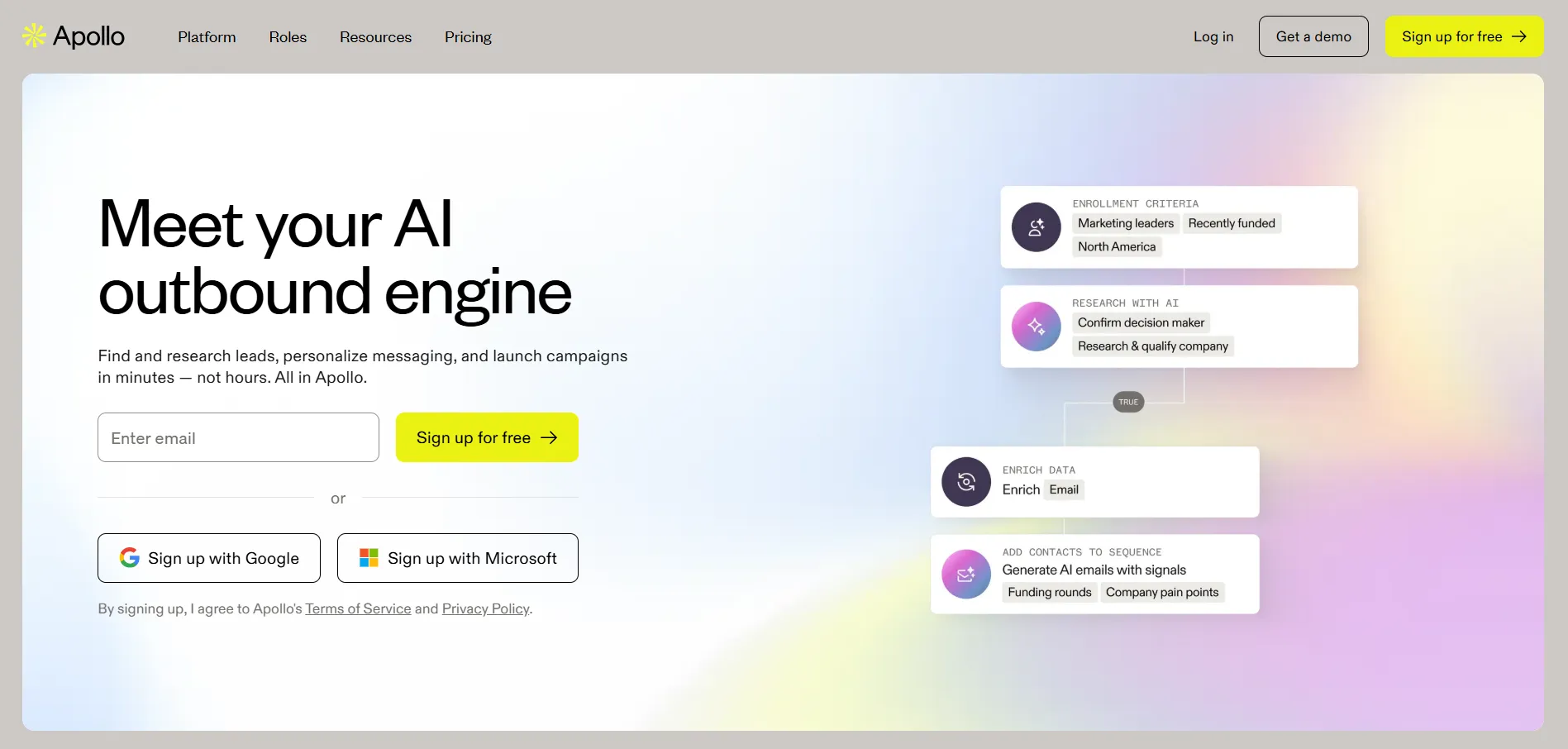
Apollo.io - Prospecting Database + Outreach Tool
Apollo.io combines a large B2B database with outreach functionality.
Key features:
- 250M+ contacts
- Advanced filtering
- Email sequencing
- CRM integrations
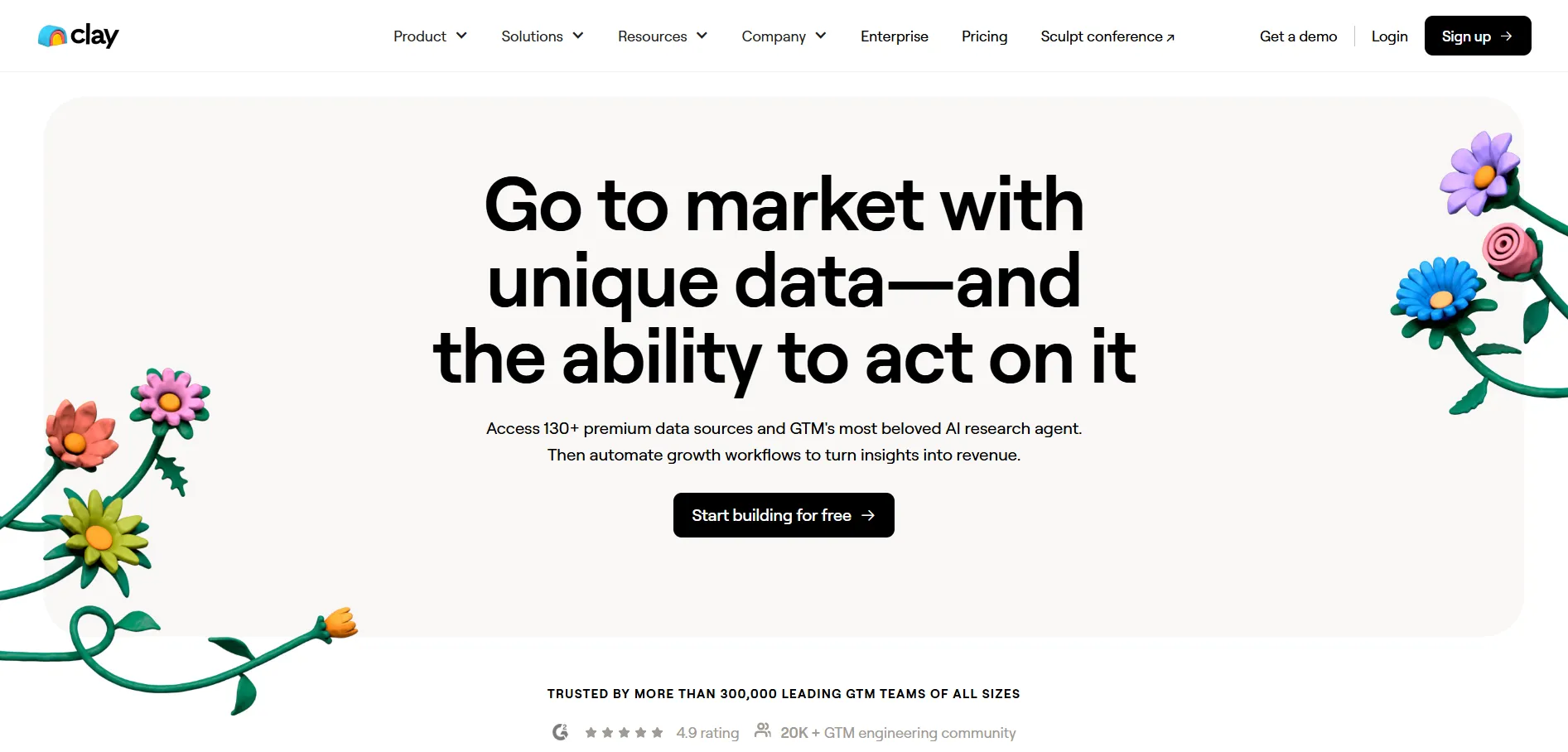
Clay - Prospecting Workflow Automation
Clay allows teams to build complex automation workflows for prospecting.
Features include:
- Multi-source data enrichment
- AI-driven personalization
- Automated lead scoring
- Workflow automation
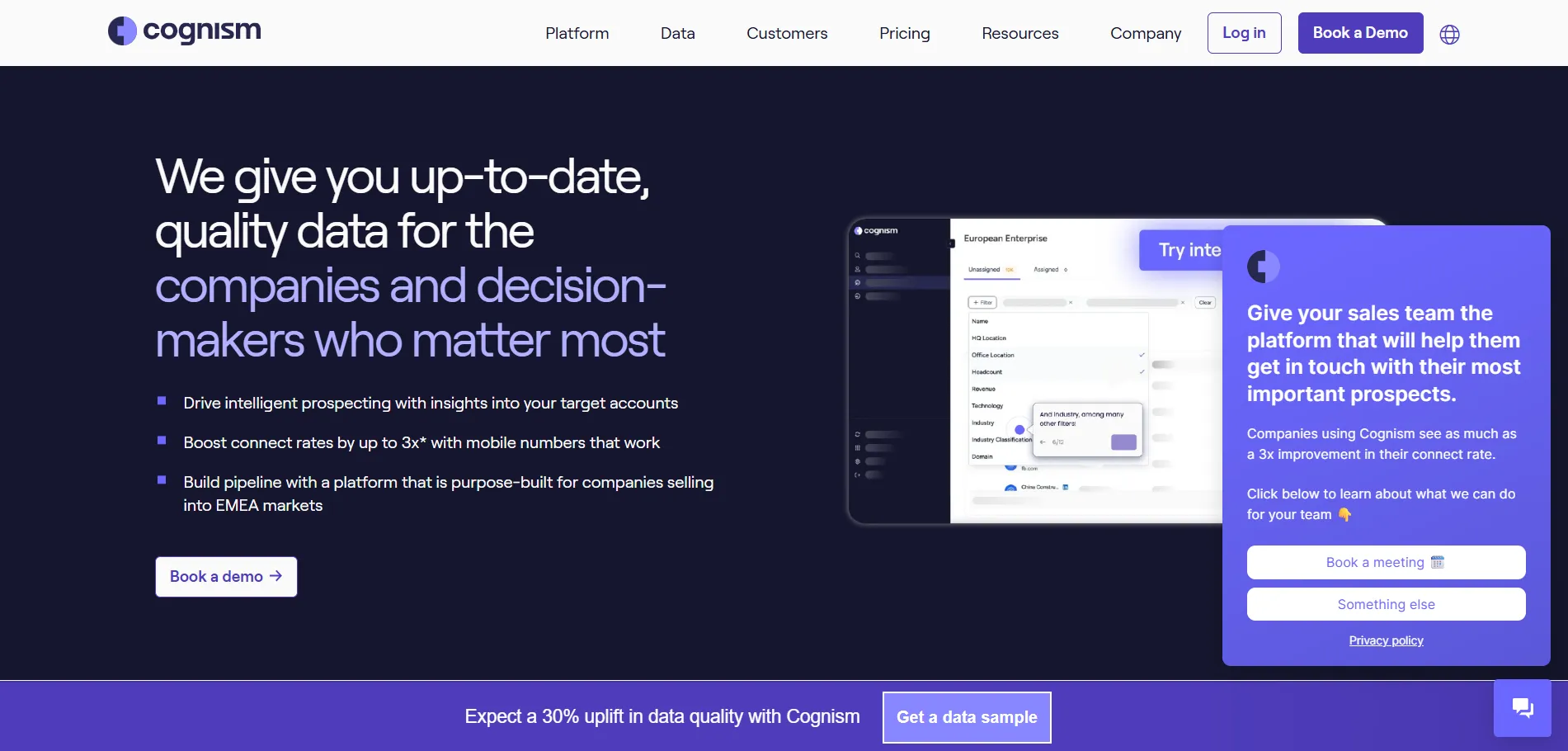
Cognism - Compliance-Focused B2B Data
Cognism focuses on high-quality global contact data.
Key capabilities:
- Verified global contact data
- Intent signals
- Phone number verification
- GDPR compliance
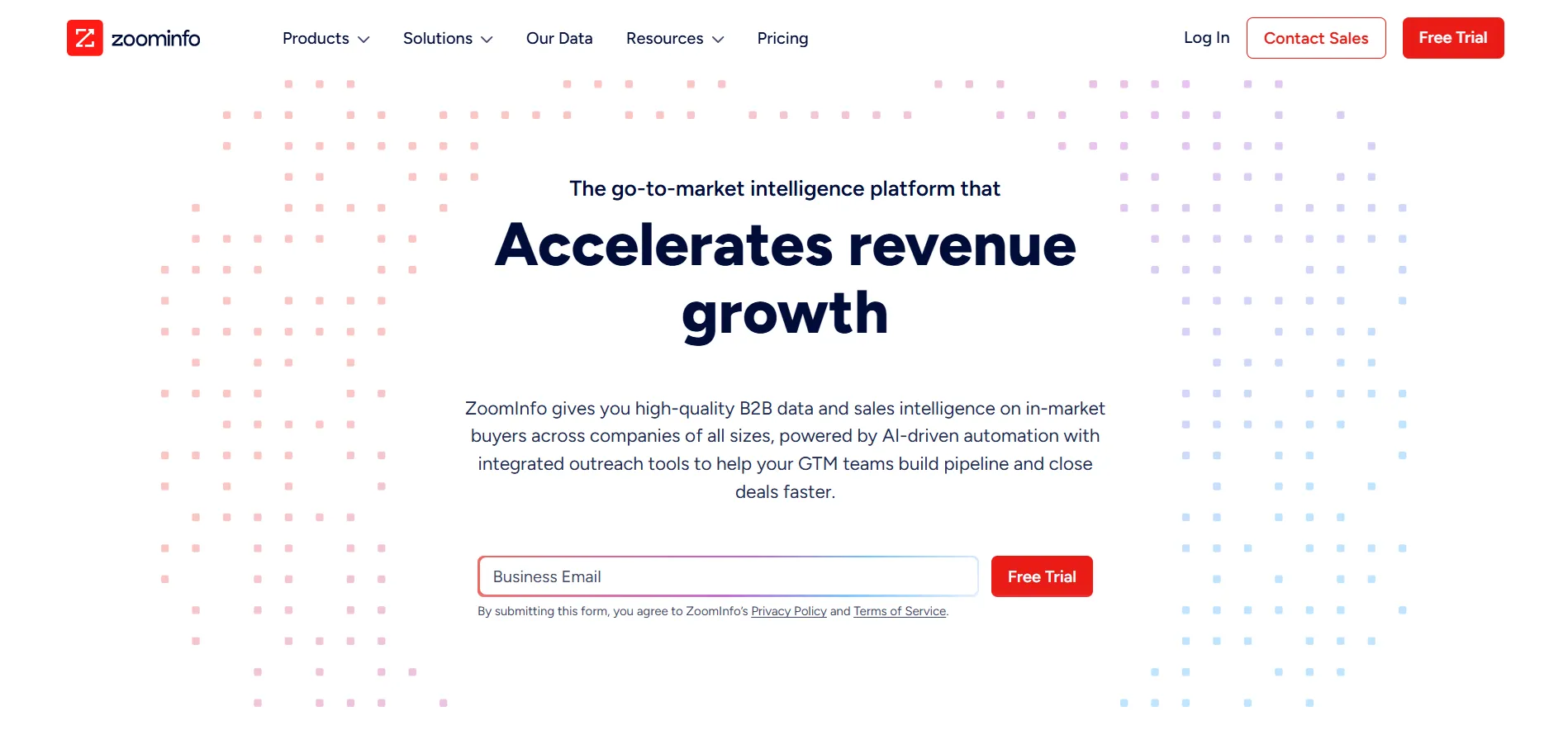
ZoomInfo - Enterprise Sales Intelligence
ZoomInfo provides one of the largest B2B intelligence databases.
Features include:
- Extensive company insights
- Verified contact data
- Intent data
- Sales intelligence tools
Clearbit - Real-Time Data Enrichment
Clearbit enriches contact and company data in real time.
Capabilities include:
- Website visitor identification
- Account scoring
- Real-time data enrichment
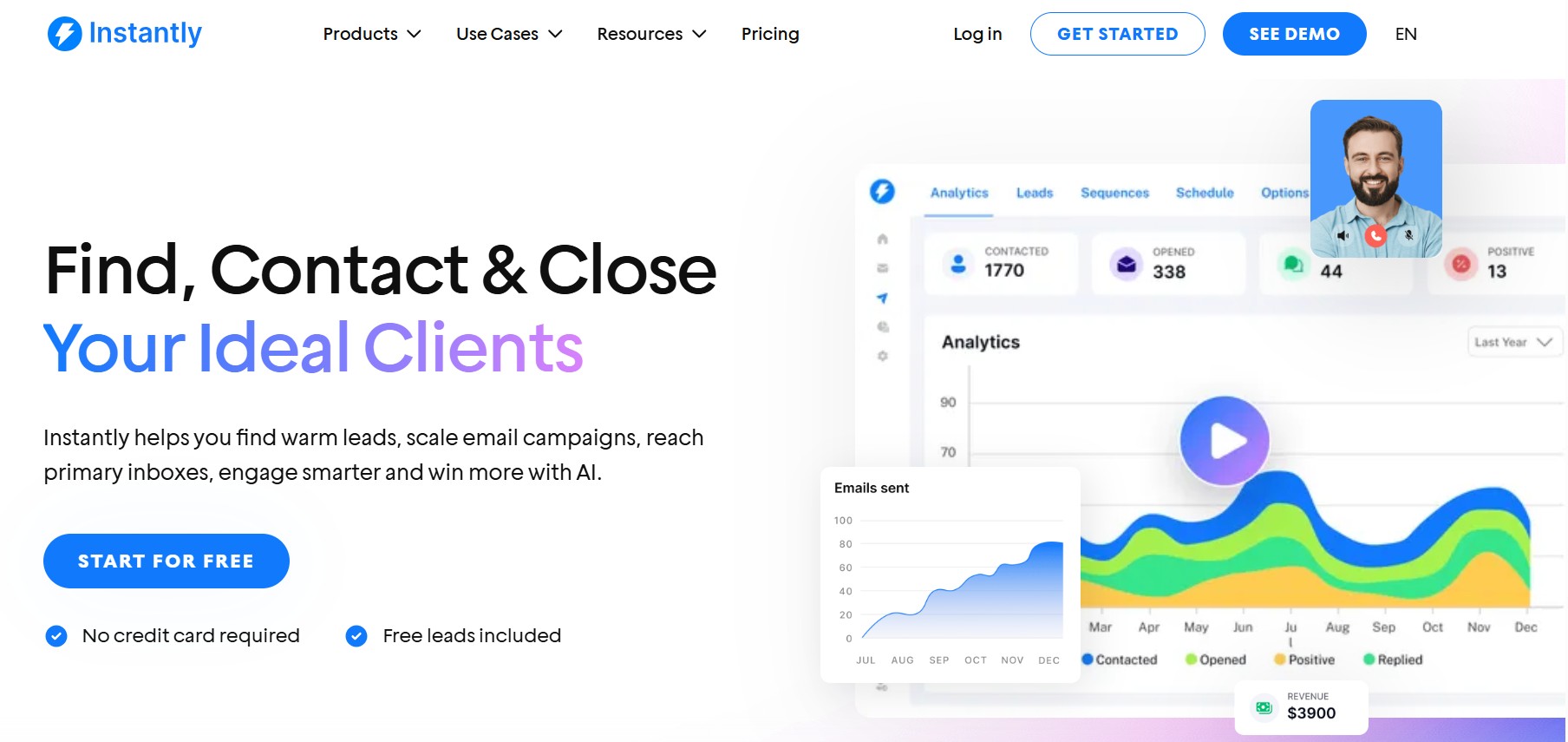
Instantly - Cold Email Automation
Instantly helps teams run large-scale cold email campaigns.
Features include:
- Unlimited sending accounts
- Email warmup
- Campaign analytics
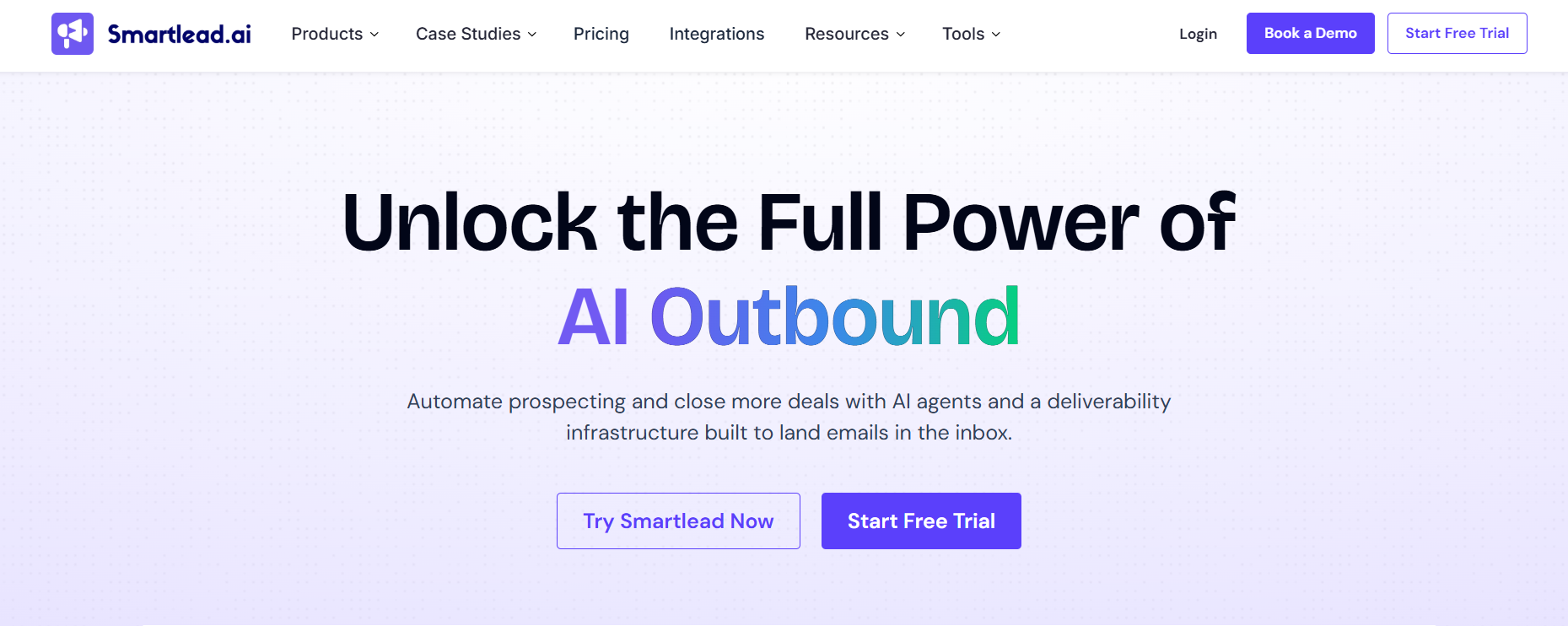
Smartlead - Scalable Outreach Automation
Smartlead focuses on high-volume outreach with strong deliverability.
Features include:
- Multi-inbox sending
- Automated email warmup
- Campaign analytics
LinkedIn Sales Navigator - Social Prospecting
LinkedIn Sales Navigator helps identify and track decision-makers.
Key features:
- Advanced search filters
- Job change alerts
- Lead tracking
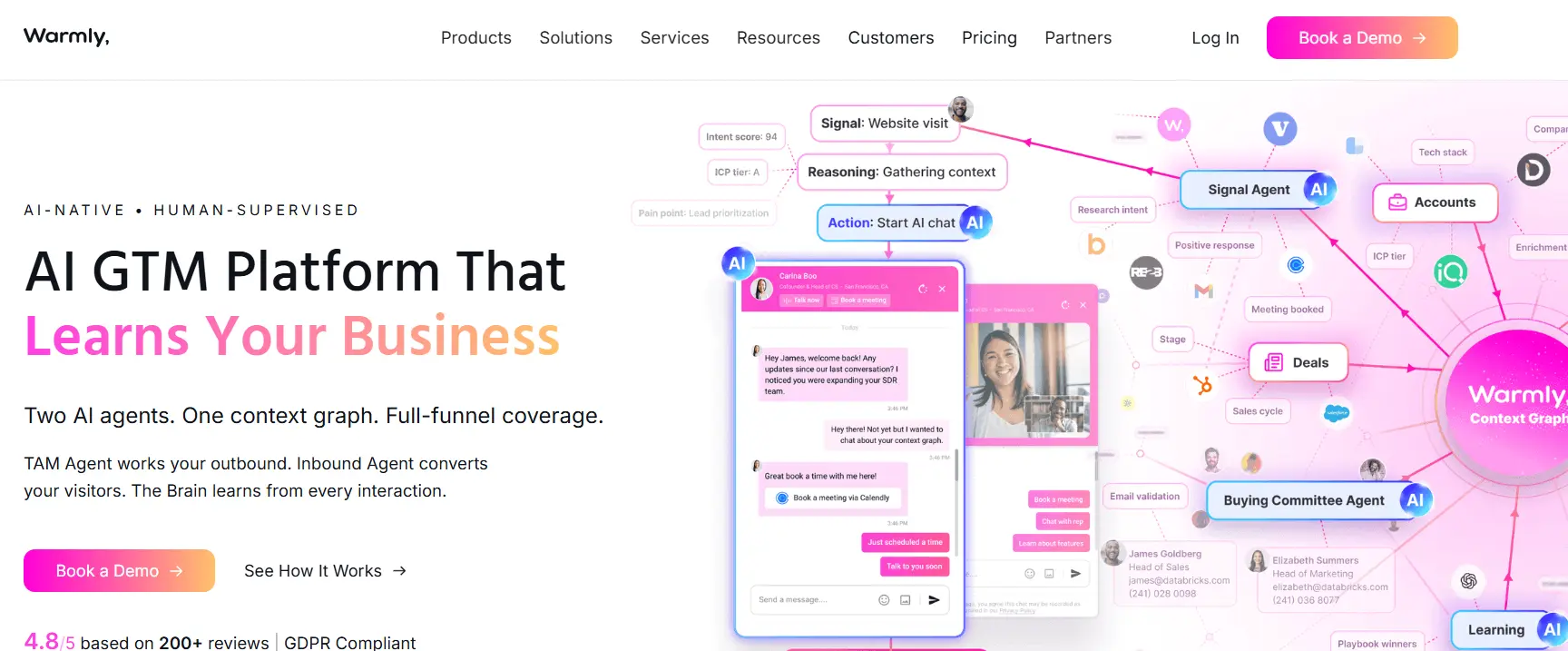
Warmly.ai - Website Visitor Identification
Warmly.ai identifies companies visiting your website before they fill out forms.
This allows sales teams to reach warm prospects earlier in the buying journey.
Building a Prospecting Automation Workflow
Automation becomes powerful when all tools work together in a single workflow.
Step 1 - Define Your Ideal Customer Profile (ICP)
Define characteristics such as:
- Industry
- Company size
- Revenue range
- Technology stack
- Decision-maker roles
A clear ICP ensures outreach targets the right companies.
Step 2 - Build Your Prospect List
Use data platforms to identify companies matching your ICP.
Step 3 - Enrich Contact Data
Use enrichment tools to retrieve verified contact information.
Step 4 - Apply Signal-Based Lead Scoring
Use intent signals to prioritize prospects most likely to convert.
Step 5 - Launch Automated Outreach
Run multi-channel sequences including:
- Email
- LinkedIn
- Calls
Step 6 - Monitor and Optimize Campaigns
Track:
- Reply rates
- Meeting bookings
- Conversions
Use insights to improve targeting and messaging.
Common Mistakes in Prospecting Automation
Many organizations fail despite having powerful tools.
Common mistakes include:
Over-Automation
Automation should support personalization, not replace it.
Robotic messages lead to low engagement.
Poor Data Quality
Outdated data leads to:
- High bounce rates
- Poor deliverability
- Low engagement
Ignoring Buyer Intent
Volume alone does not generate pipeline.
Timing outreach with buyer intent signals dramatically increases conversions.
Fragmented Tool Stacks
Disconnected tools create data silos.
Automation works best when all systems are integrated.
The Future of Prospecting Automation
The future of sales prospecting will be driven heavily by artificial intelligence.
AI SDR Agents
AI-powered Sales Development Representatives (SDRs) will automate:
- Prospect research
- Personalized outreach
- Follow-ups
These systems will operate 24/7.
Predictive Lead Scoring
AI models will analyze large datasets to predict which accounts are most likely to convert.
Autonomous Outreach Systems
Future systems may automate the entire outbound process:
- Identifying prospects
- Launching campaigns
- Optimizing messaging
Human sales teams will focus on relationship-building and negotiations.
Frequently Asked Questions About Prospecting Automation
What is prospecting automation?
Prospecting automation refers to using automation tools and AI software to identify potential customers, enrich contact data, and launch personalized outreach campaigns.
What tools are used for prospecting automation?
Common tools include:
- Apollo.io
- Clay
- Cognism
- ZoomInfo
- Instantly
- Smartlead
- Clearbit
These tools help automate lead discovery, enrichment, and outreach.
What are the benefits of sales prospecting automation?
Prospecting automation helps companies:
- Scale outbound outreach
- Improve data accuracy
- Identify high-intent buyers
- Generate predictable sales pipeline
What is the best prospecting automation tool?
The best tools depend on your workflow, but popular platforms include:
- Apollo.io for prospect databases
- Clay for workflow automation
- ZoomInfo for enterprise intelligence
- Instantly for cold email outreach
Can AI automate sales prospecting?
Yes. Modern AI-powered SDR tools can automate:
- Prospect research
- Personalized outreach
- Follow-up messaging
- Lead scoring
This allows sales teams to focus on closing deals rather than manual research.
Conclusion
Sales prospecting has evolved dramatically.
Manual prospecting alone is no longer enough for modern B2B companies.
With the right automation stack, organizations can build scalable pipeline generation systems.
By combining:
- Data discovery platforms
- Contact enrichment tools
- Intent signal platforms
- Outreach automation tools
- CRM integrations
Companies can create a predictable revenue engine.
Organizations that embrace prospecting automation today will gain a major competitive advantage.
They will:
- Reach more prospects
- Identify high-intent buyers earlier
- Generate predictable revenue growth
As AI continues to evolve, automation will become an even more critical component of modern sales systems.
Companies that adopt these technologies now will be best positioned for success in the future.
👉 Book a GTM Strategy Call with DevCommX

Planning your next GTM move? Get a quick audit of your sales, outbound, and RevOps systems.
More Blogs































.webp)


























Book Your Free GTM Audit
Replace manual prospecting with intelligent automation.
Let your sales team focus on closing.