The best AI BDR tools in 2026 are software platforms that autonomously research accounts, build target lists, write personalized outreach, and book qualified meetings with little human input. An AI BDR tool replaces or augments the top-of-funnel work a human business development representative does, turning buying signals and account data into booked calls on your reps' calendars. The strongest platforms this year are judged by one metric that matters: meetings booked that actually convert to pipeline, not just emails sent.
This guide ranks 10 real platforms by their ability to book meetings, explains how AI BDR differs from AI SDR, and gives approximate pricing so you can shortlist before you spend a single demo hour. Pricing for every vendor below is directional and changes often, so treat it as a starting point and check current pricing with each provider.
What Is an AI BDR Tool?
An AI BDR tool is an autonomous or semi-autonomous agent that handles the prospecting workflow: finding accounts that fit your ideal customer profile, enriching contact data, deciding who to reach and when, and running multi-channel outreach until a prospect replies or books. Where legacy sales engagement platforms automate sending, an AI BDR agent automates the thinking, the research, the message, the sequencing logic, and the follow-up cadence.
The category exists because outbound got harder. Buyers ignore generic mass email, deliverability rules tightened, and the cost of a fully loaded human BDR keeps climbing. According to Gartner, by 2028 roughly one-third of enterprise software applications are expected to include agentic AI, up from less than 1% in 2024. Sales development is one of the first functions where that shift is showing up in production, not just pilots.
AI BDR vs AI SDR: What's the Difference?
In most organizations BDRs handle outbound prospecting to cold accounts, while SDRs qualify inbound leads and hand them to account executives. The titles blur in practice, and most vendors use "AI SDR" and "AI BDR" interchangeably for marketing reasons. If you want the full breakdown of the human roles, our guide on BDR vs SDR and which is better for your team covers it in depth.
For tooling, the practical distinction is direction of motion. An AI BDR tool is built for cold, outbound, signal-triggered prospecting at the top of the funnel. An AI SDR tool often leans toward inbound triage, lead routing, and instant follow-up on form fills and website visits. Many platforms now do both, which is why this list and our companion roundup of the best AI SDR platforms share several names. Read both if your motion is mixed.
How We Ranked These AI BDR Tools
We ranked on the outcome buyers actually pay for. The criteria, in order of weight: meetings booked per dollar spent, quality of those meetings (do they convert to pipeline), degree of true autonomy versus needing a human to babysit every step, data and signal quality feeding the agent, deliverability safeguards, and time-to-first-meeting after setup. Ease of integration with your CRM and existing stack served as a tiebreaker.
One caveat worth stating plainly: very few vendors publish independently audited meeting-booked numbers. Where a platform claims results, we treat them as vendor-reported. Run a paid pilot against your own list before you sign an annual contract.
The 10 Best AI BDR Tools in 2026
1. DevCommX
Best for B2B teams that want to own an autonomous, signal-based AI SDR system rather than rent a managed campaign. DevCommX builds the infrastructure into your stack so prospecting triggers on real buying signals such as hiring, funding, tech changes, and intent, instead of firing against a static list. Strengths: signal-first targeting, you own the system and the data, and clients typically reach 40+ qualified demos within six weeks of setup. Limits: it is a build-and-own engagement, so it suits teams investing in durable GTM infrastructure rather than buying a quick self-serve seat. Pricing: custom, scoped to your pipeline.
2. Artisan (Ava)
Best for SMB and mid-market teams that want a polished all-in-one AI BDR with built-in data. Artisan's agent Ava handles list building, research, and email sequencing from one interface. Strengths: clean UX, bundled B2B data, fast onboarding. Limits: less flexible than systems you control end to end, and outbound quality depends heavily on the bundled data for your segment. Pricing: approximate seat-based plans starting in the low hundreds per month; check current pricing.
3. 11x (Alice)
Best for venture-backed teams scaling outbound volume quickly. 11x positions Alice as a digital worker that researches and runs multi-channel sequences autonomously. Strengths: aggressive autonomy, multi-channel coverage. Limits: results vary by ICP, and you will want strong oversight on messaging early. Pricing: custom, typically enterprise-oriented; request a quote.
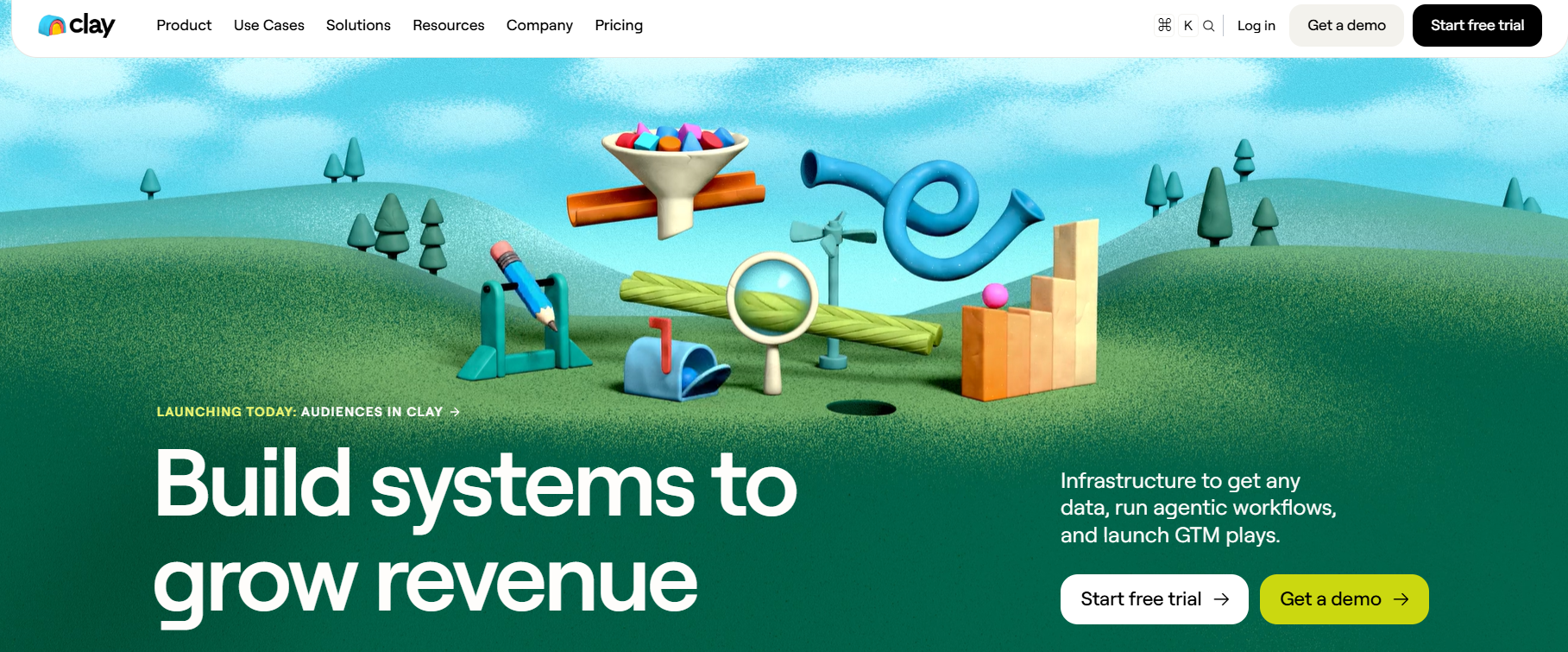
4. Clay
Best for RevOps and growth teams that want to engineer their own enrichment and outbound logic. Clay is less a turnkey BDR and more a programmable data and workflow layer with AI built in. Strengths: unmatched flexibility, deep enrichment via many data providers, strong signal orchestration. Limits: steep learning curve, you build the agent rather than buy it. Pricing: usage and credit-based tiers from a free plan up to enterprise; check current pricing.
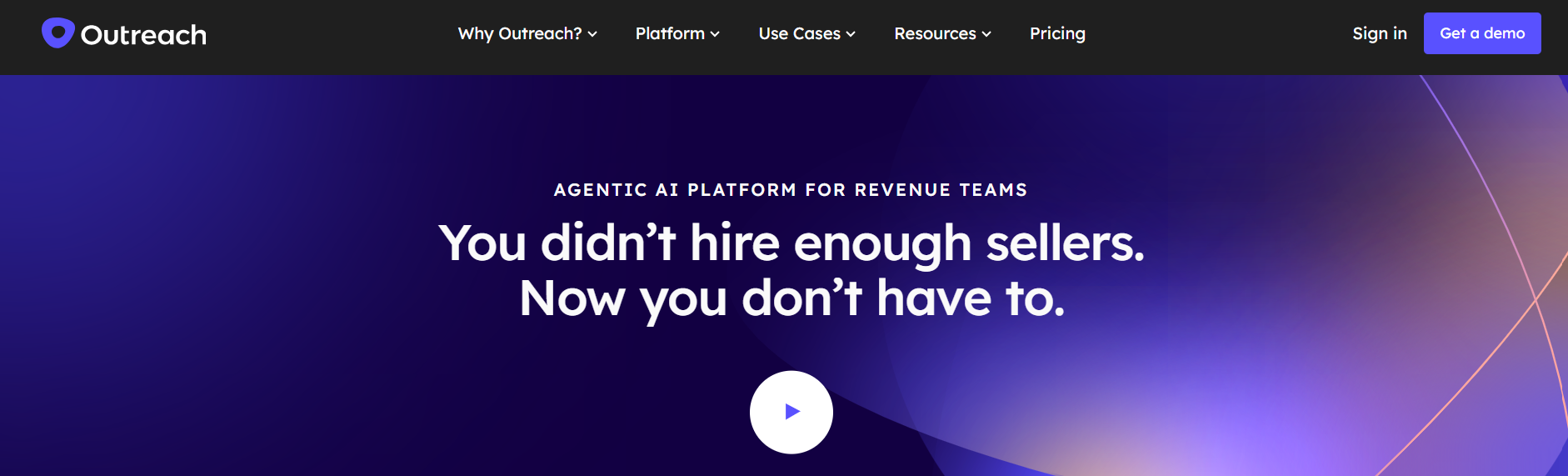
5. Outreach
Best for enterprise sales orgs that already live in a sales engagement platform and want AI layered on top. Outreach has added AI agents and assist features to its established sequencing platform. Strengths: Outreach.io customers benefit from enterprise-grade governance, deep CRM integration, and robust reporting.Limits: AI features are additive to a heavier platform, not a from-scratch autonomous agent. Pricing: enterprise per-seat, generally higher; request a quote.
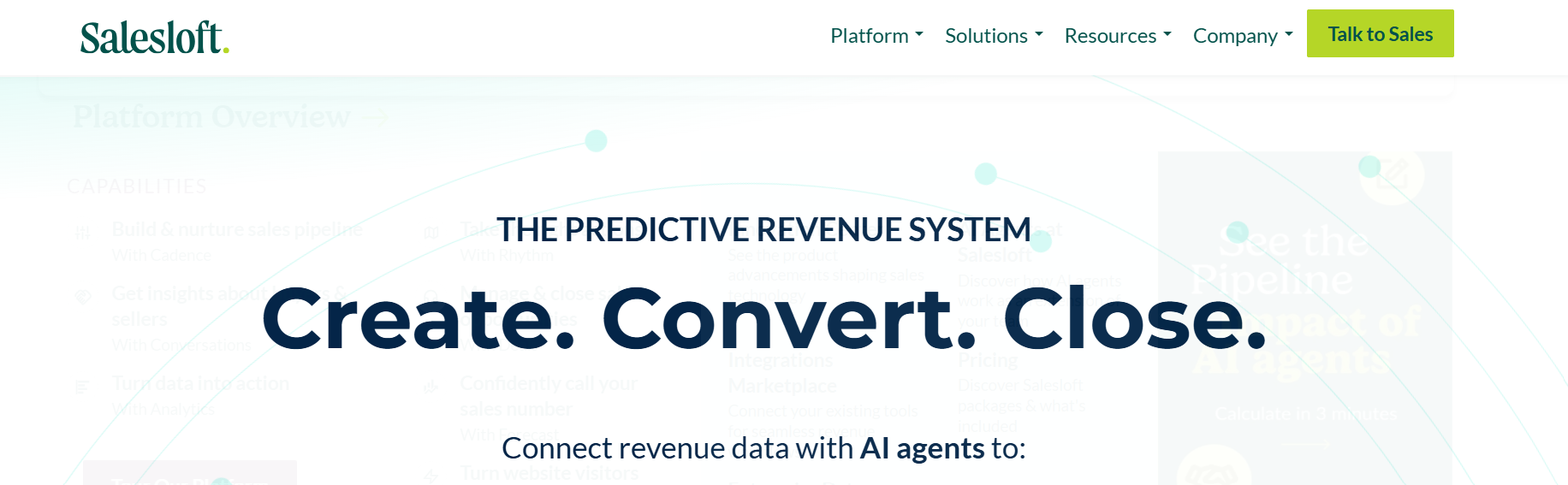
6. Salesloft
Best for revenue teams wanting AI-assisted prospecting inside a mature engagement and forecasting suite. Salesloft's Rhythm and AI features prioritize the next best action across cadences. Strengths: signal-to-action prioritization, strong analytics, broad adoption. Limits: assistive rather than fully autonomous, and priced for committed teams. Pricing: enterprise per-seat; check current pricing.
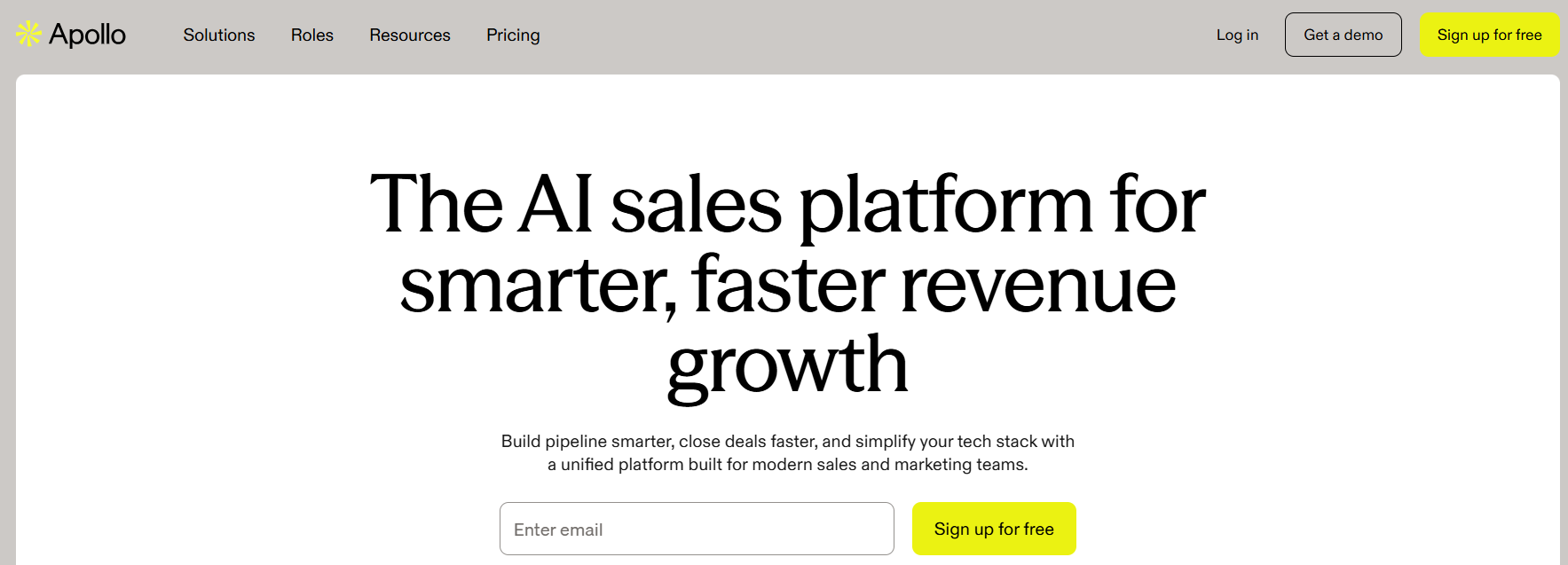
7. Apollo.io
Best for budget-conscious teams that want data plus AI outreach in one affordable package. Apollo bundles a large B2B contact database with sequencing and AI writing assistance. Strengths: low cost of entry, huge contact database, fast to start. Limits: shared database means contacts get hit by many senders, so personalization and deliverability discipline matter. Pricing: approximate free tier plus paid plans in the tens of dollars per seat monthly; check current pricing.
8. Regie.ai
Best for teams that want autonomous prospecting agents with strong content generation. Regie.ai's Auto-Pilot agents source, prioritize, and engage prospects while keeping a human in the loop for approvals. Strengths: content quality, configurable autonomy, deliverability tooling. Limits: smaller data footprint than the database-first players, so pair with your own enrichment. Pricing: custom plans; request a quote.
9. AiSDR
Best for early-stage and SMB teams wanting a low-lift, self-serve AI rep. AiSDR handles inbound and outbound email and texting with quick setup. Strengths: fast time-to-launch, transparent entry pricing, handles replies. Limits: best for simpler motions, less suited to complex enterprise ABM. Pricing: approximate flat plans starting in the hundreds per month; check current pricing.
10. Qualified (Piper)
Best for inbound-heavy teams on Salesforce that want to convert website visitors instantly. Qualified's Piper agent works the website and pipeline, leaning inbound rather than cold outbound. Strengths: real-time website conversion, tight Salesforce fit. Limits: inbound focus means it is more AI SDR than cold AI BDR for many teams. Pricing: enterprise, Salesforce-oriented; request a quote.
AI BDR Tools Comparison Table
How to Choose the Right AI BDR Tool
Start with your motion, not the feature list. If you run cold outbound ABM, weight signal quality and autonomy. If most of your pipeline is inbound, an inbound-first agent like Qualified or an AI SDR platform will book more meetings than a cold-outbound engine. Map the tool to the funnel stage where you actually lose deals.
Match Autonomy to Your Team's Maturity
An autonomous BDR agent that runs unsupervised is powerful and risky. If your messaging and ICP are still in flux, a human-in-the-loop platform protects your domain reputation while you learn. If your playbook is dialed in, higher autonomy compounds faster. Salesforce's own research on AI agents notes that trust and human oversight remain the top adoption concern for sales leaders, so phase autonomy in rather than flipping it on day one.
Pressure-Test the Meetings Metric
Ask every vendor the same question: how many qualified meetings, not emails or replies, did a comparable customer book in 90 days, and how were those meetings defined? Vague "engagement" metrics are a red flag. Insist on a paid pilot scoped to a real segment of your list, and judge the tool on meetings your AEs accept. The shift toward AI here is also reshaping headcount decisions, which we cover in our piece on the death of the BDR role and what AI agents mean for SDR hiring.
Build This With DevCommX
DevCommX builds autonomous, signal-based AI SDR systems for B2B teams - and you own the infrastructure, not just a managed campaign. Clients typically go from setup to 40+ qualified demos within 6 weeks, because the system triggers on real buying signals instead of static lists. Book a GTM strategy call to map this to your pipeline.
FAQ
What is the difference between an AI BDR and an AI SDR tool?
An AI BDR tool is built for cold, outbound, signal-triggered prospecting at the top of the funnel, while an AI SDR tool often leans toward inbound triage, instant lead follow-up, and routing. In practice the labels are used interchangeably by most vendors, so judge a platform by whether it fits your outbound or inbound motion rather than its name.
Can an autonomous BDR agent really book meetings without a human?
Yes, the strongest platforms can research accounts, write outreach, and book meetings with minimal human input. But fully unsupervised autonomy is best once your ICP and messaging are proven. Until then, keep a human in the loop to protect deliverability and brand voice, then increase autonomy as results and trust build.
How much do AI BDR tools cost in 2026?
Pricing ranges widely, from free or low tens of dollars per seat for database-first tools like Apollo, to low hundreds per month for self-serve agents, to custom enterprise contracts for autonomous systems. All figures are approximate and change often, so confirm current pricing with each vendor and weigh cost against meetings booked, not seats.
Which AI BDR tool books the most meetings?
There is no single winner, because results depend on your ICP, data, and offer. Signal-based systems that trigger on real buying intent tend to outperform static-list tools on meeting quality. The reliable way to know is a paid pilot against your own list, judging each tool on qualified meetings your account executives actually accept.
Do AI BDR tools replace human BDRs?
They replace the repetitive top-of-funnel work, list building, research, first-touch outreach, and follow-up, more than they replace people entirely. Many teams redeploy human reps to handle live conversations, complex objections, and relationship building once a meeting is booked. The role is shifting from manual prospecting toward oversight and high-value selling.
How do I evaluate an AI BDR tool before buying?
Run a paid pilot scoped to a real segment of your list. Ask each vendor how many qualified meetings a comparable customer booked in 90 days and how they defined qualified. Measure on meetings your AEs accept, check CRM integration and deliverability safeguards, and avoid signing an annual deal on vague engagement metrics.
References
- Gartner: Sales Technology research and guidance
- Salesforce: State of Sales report
- Harvard Business Review: Sales and Marketing






.webp)