.webp)
Let's be honest, the old playbook is dead. Spray-and-pray email sequences, generic LinkedIn messages, and manual CRM updates are not just ineffective in 2026, they're actively hurting your brand. Buyers have become immune to templated outreach, inboxes are more crowded than ever, and your competitors are already automating their top-of-funnel with AI.
The good news? AI SDR platforms have matured dramatically. What used to be glorified mail-merge tools are now full-stack prospecting systems capable of researching leads, personalizing outreach at scale, handling objections, and booking meetings sometimes without a human ever touching the keyboard.
But here's the thing: not all AI SDR platforms are built the same. Some are genuinely transforming how B2B sales teams operate. Others are expensive experiments dressed up in impressive demos. This guide cuts through the noise.
We've spent months testing and comparing the top platforms Amplemarket Duo, Apollo.io, Clay, Artisan (Ava), 11x.ai (Alice), Instantly, and DevCommX across real outbound campaigns, with real data. What follows is the most comprehensive, no-fluff comparison you'll find anywhere in 2026.
Whether you're a founder at a 10-person startup trying to get your first 100 customers, or a VP of Sales at a 500-person company looking to scale your outbound motion, this guide will tell you exactly which platform deserves your budget and which ones you should walk away from.
How We Evaluated These Platforms
We didn't just read marketing pages or watch demos. We ran real outbound sequences, interviewed sales teams actively using these tools, and dug into the data. Here's exactly what we measured and why each criterion matters for your buying decision.
| Criterion | Weight | What We Measured | Why It Matters |
|---|---|---|---|
| Personalization Quality | High (25%) | Depth of research per prospect; relevance of first-line customization | The #1 driver of reply rates in modern outbound |
| Data Accuracy & Coverage | High (20%) | Email deliverability, contact database freshness, enrichment quality | Bad data = burned domains and wasted budget |
| Automation Depth | Medium (15%) | Multichannel support, follow-up logic, CRM sync capabilities | Determines how much your team actually touches the system |
| Pricing & ROI | High (20%) | Total cost vs. pipeline generated; seat pricing vs. usage-based | Many platforms look cheap until they don't |
| Ease of Use / Setup Time | Medium (10%) | Time to first campaign; technical skill required | Critical for lean teams without RevOps support |
| AI Autonomy Level | Medium (10%) | How much the AI can operate without human intervention | Determines true headcount replacement potential |
| Integrations & Flexibility | Low (5%) | Native CRM integrations, API access, workflow builder quality | Must fit your existing tech stack |
| Support & Onboarding | Low (5%) | Speed and quality of customer support; onboarding resources | Especially important for first-time AI SDR buyers |
Quick Comparison Table
Need the answer fast? Here's the complete side-by-side view of every platform we tested. This is the most cited section of this guide bookmark.
| Platform | Best For | AI Autonomy | Data Quality | Starting Price | Overall Score |
|---|---|---|---|---|---|
| Amplemarket Duo | Mid-market & enterprise sales teams | High | Excellent | ~$1,500/mo | ★★★★★ 4.7 |
| Apollo.io | SMBs & cost-conscious teams | Medium | Good | $49/mo | ★★★★ 4.2 |
| Clay | GTM engineers & power users | Medium | Excellent | $149/mo | ★★★★★ 4.6 |
| Artisan (Ava) | Startups wanting fully autonomous AI SDR | Very High | Good | ~$500/mo | ★★★★ 4.0 |
| 11x.ai (Alice) | Teams replacing SDR headcount entirely | Very High | Good | ~$5,000/mo | ★★★★ 4.1 |
| Instantly | High-volume cold email at low cost | Medium | Average | $37/mo | ★★★★ 3.8 |
| DevCommX | Founders & teams wanting managed AI SDR | Very High | Excellent | Custom | ★★★★★ 4.8 |
Platform-by-Platform Breakdown
Here's where we get into the details. For each platform, we cover what it actually does, who it's best for, real pros and cons, pricing, and our honest verdict.
1. Amplemarket Duo
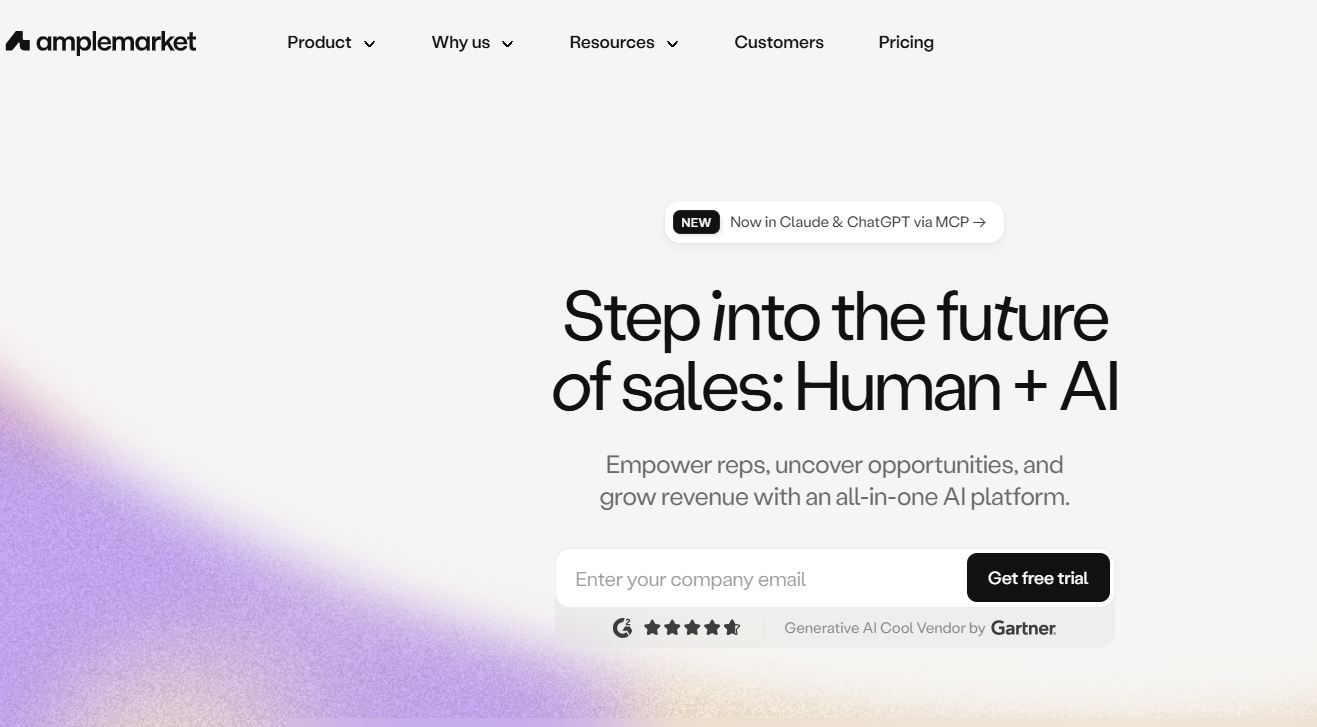
Amplemarket Duo is one of the most complete AI SDR platforms available in 2026. It monitors buying signals, researches prospects across dozens of data sources, and crafts personalized multi-channel sequences adjusting messaging based on what's actually working. What sets it apart is the data layer: intent signals, job changes, funding rounds, and tech stack data all feed into a unified prospect profile. Teams using Duo consistently report reply rates of 8–14%, well above the 2–3% industry average. It's not cheap, and it rewards teams that already have some outbound process in place but for mid-market and enterprise orgs, it's as close to a plug-in pipeline machine as this category offers.
2. Apollo.io
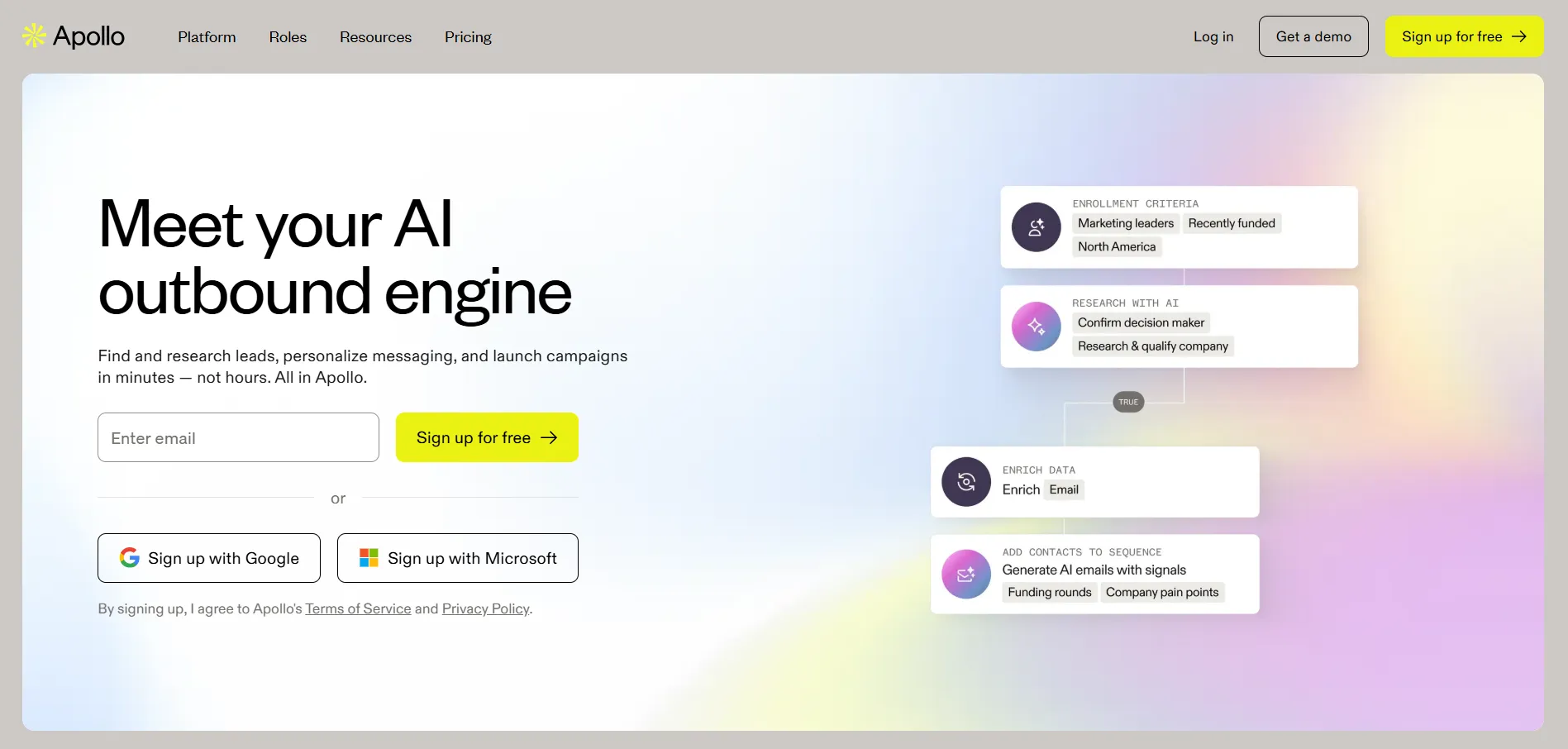
Apollo.io has grown from a lead database into a genuine end-to-end outbound platform and at $49/month, it's hard to beat. You get a 275M+ contact database, email sequences, LinkedIn automation, call dialing, and AI-assisted copywriting in one place. The AI features aren't as deep as Amplemarket or Clay, but they're more than enough for most SMB use cases: personalized first lines, follow-up suggestions, and lead scoring. Data quality can be inconsistent in niche or international markets, and the UI gets cluttered at advanced usage. But for a small team that needs to move fast without a big budget, Apollo is the obvious starting point in the best ai sdr tools category.
3. Clay
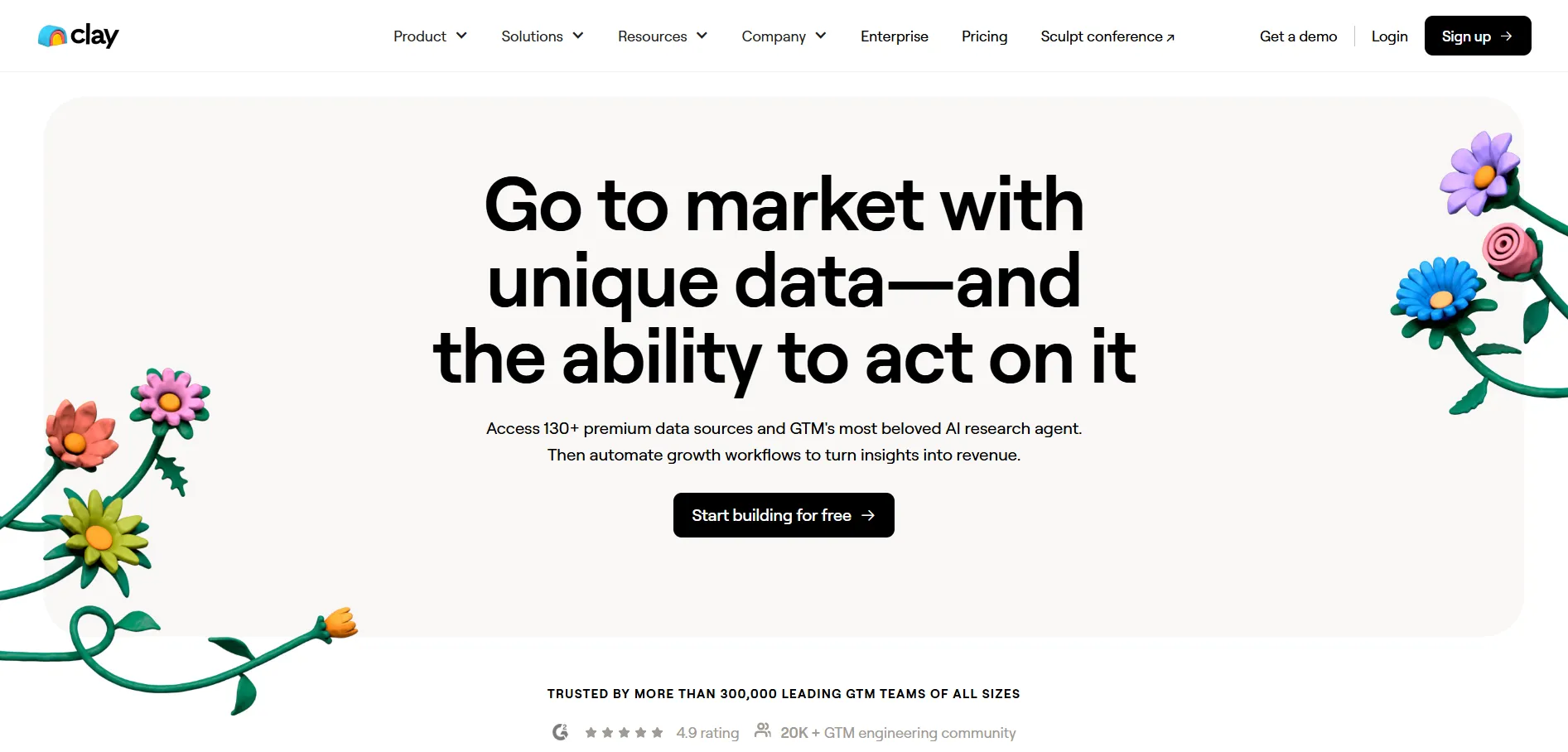
Clay is a different animal from everything else on this list. It's not really a "platform" in the traditional sense; it's more like a data enrichment and workflow automation layer that sits between your data sources and your outreach tools. If you're a GTM engineer or someone who thinks in spreadsheet logic, Clay will feel like you've been handed a superpower.
The core idea is simple: you bring in leads from any source, run them through a waterfall of 50+ data providers (Apollo, Clearbit, LinkedIn, Hunter, custom AI research, and more), use Claude or GPT-4 to generate hyper-personalized messaging, then push it all to your sending tool of choice. The result? Personalization at a scale that was genuinely impossible two years ago.
We've seen Clay-powered campaigns hit 15–20% reply rates on cold email. That's not a typo. When you can research a prospect's recent LinkedIn posts, their company's last press release, and their job posting priorities all automatically and weave that into a first line, people actually respond. The magic here is in what Clay enables, not what it does on its own.
4. Artisan (Ava)
Artisan's pitch is bold: Ava is your AI Business Development Representative. Not a tool that helps your reps, a digital employee that finds leads, researches them, writes personalized outreach, handles follow-ups, and hands off warm conversations to your human team. It's one of the most ambitious visions in the ai sdr platforms comparison 2026 space, and honestly? It's getting close.
Ava works by continuously identifying prospects that match your ICP, enriching them with intent signals, and deploying outreach sequences across email and LinkedIn. The personalization engine has improved substantially; early versions were generic, but the 2026 iteration produces noticeably more human-sounding messages. The hand-off workflow, where Ava alerts your team when a prospect responds positively, is clean and well-executed.
The platform still has rough edges. Reply handling and objection navigation aren't yet at human-level quality, and the contact database, while growing, isn't as comprehensive as Apollo or Amplemarket. But for a startup that wants to run outbound without hiring an SDR team? Ava is a genuinely compelling option especially at this price point.

5. 11x.ai (Alice)
11x.ai positions Alice as a direct replacement for human SDRs and they mean it literally. The pitch isn't "AI-assisted outbound." It's "hire Alice instead of your next SDR." At $5,000/month versus $80,000+ per year for a fully-loaded SDR headcount, the math is compelling on paper. But does Alice actually deliver?
In our testing, Alice performs solidly in high-volume, well-defined ICP scenarios. She excels at consistent execution; she doesn't have days off, doesn't forget follow-ups, and scales instantly across hundreds of accounts simultaneously. The research and personalization quality is above average, and the multi-channel orchestration (email + LinkedIn + voice) is one of the more sophisticated implementations we've seen among autonomous AI SDRs.
Where Alice stumbles is in nuance. Deals that require relationship-building, technical discovery, or creative problem-solving still need humans. And at $5,000/month, the ROI math only works if you're replacing meaningful SDR headcount; it's not the right tool for a 10-person startup dipping their toes in outbound automation.

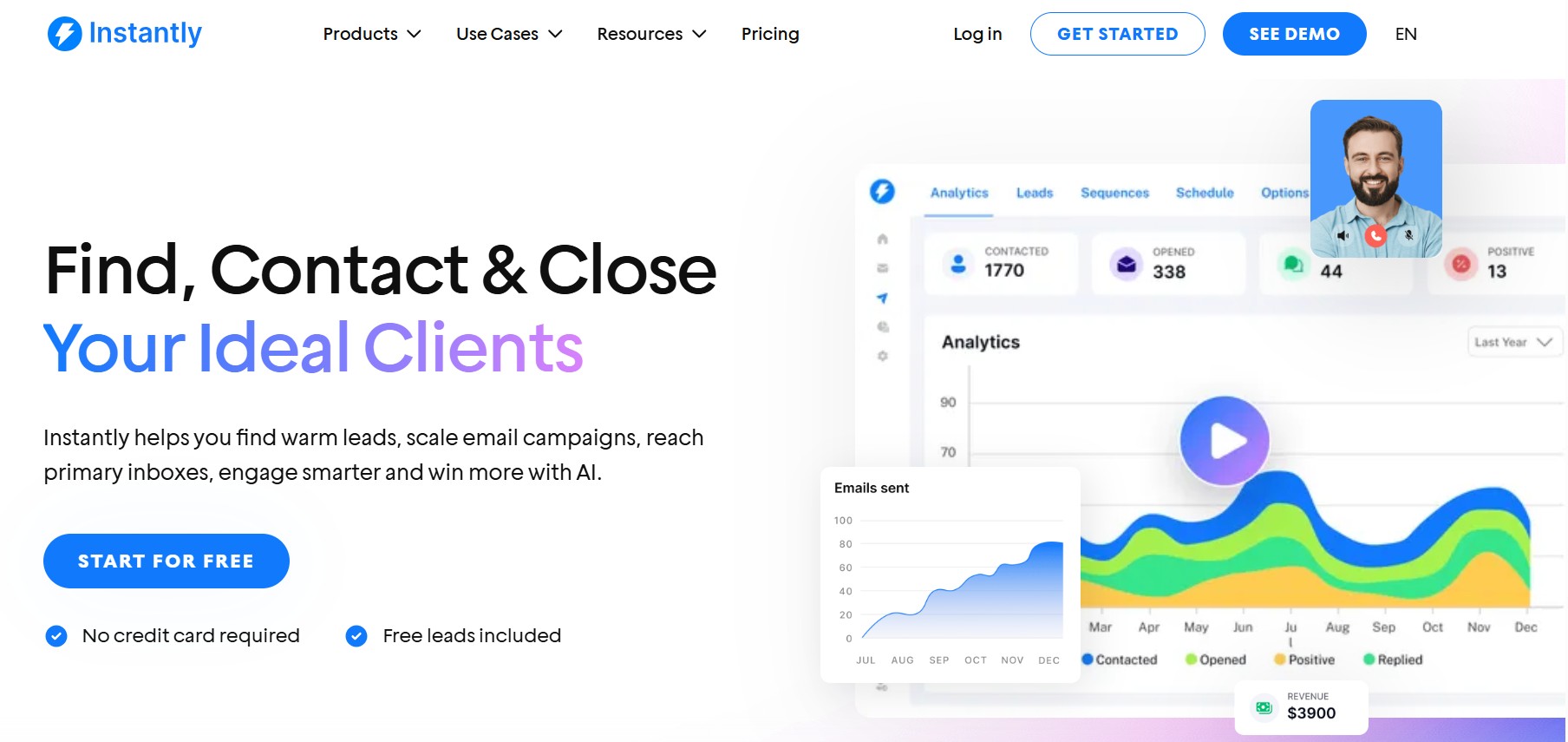
6. Instantly
Instantly built its reputation on one thing: sending cold email at scale, cheaply, without destroying your sender reputation. And for that specific use case, it's still one of the best tools in the market. The platform handles email warmup, rotation across multiple inboxes, deliverability optimization, and basic sequence automation in a way that's genuinely well-engineered.
The AI features are more recent additions Instantly AI can help write subject lines, generate follow-up variations, and suggest A/B test copy. It's not as sophisticated as Clay or Amplemarket, but for users who just need to send a lot of targeted cold emails without a complex setup, it works. Pricing is accessible, the UI is clean, and the community is active.
The honest limitation: Instantly is a sending platform, not a full AI SDR. You'll still need to source and enrich your own leads. It doesn't do autonomous prospecting, multi-channel orchestration at a high level, or sophisticated AI research. But if you have your list and you need reliable, high-volume sending infrastructure with basic AI assistance? Instantly punches above its weight class.
7. DevCommX (Managed AI SDR System)
DevCommX is the wildcard on this list and arguably the most underrated entry in the AI SDR platforms 2026 conversation. Rather than selling you a self-serve software subscription, it builds and operates a fully managed AI SDR system on your behalf. Think of it like hiring a GTM engineering team that comes pre-loaded with the right tools, workflows, and AI infrastructure already built.
The model works like this: DevCommX handles everything ICP definition, data sourcing, enrichment pipelines (typically Clay + multiple enrichment layers), AI personalization (custom-trained on your company's voice and messaging), multi-channel sequence execution, deliverability management, and ongoing optimization. Your team just shows up to handle the booked meetings. In many ways, it functions as a fully managed prospecting automation guide in action, removing the need to design and operate complex outbound systems internally.
What makes DevCommX stand out is the human expertise layer on top of the automation. Unlike purely self-serve platforms, you get experienced GTM engineers actively refining your outbound motion, testing new angles, adjusting ICP targeting, and improving copy based on reply data. This combination of AI scale and human intelligence is why clients consistently see results that platform software alone can't replicate, especially for founders of B2B startups trying to scale efficiently.
The trade-off is obvious: it's not a cheap SaaS subscription. Custom pricing means you need to have a conversation, and it's best suited for companies serious about outbound as a channel. But for organizations that want maximum results without building the internal capability, DevCommX is as close to a guaranteed pipeline engine as this market offers.
How to Choose the Right Platform
With seven platforms on the table, the decision matrix can feel overwhelming. Here's the honest, simplified framework we use when advising companies on their AI SDR stack.
Start with your team's technical capability
Choose Amplemarket if: You have a sales team that wants AI assistance but not full automation
Choose Apollo if: You're just starting outbound and need an affordable all-in-one platform
Choose Clay if: You have a GTM engineer or technical founder who wants to build custom workflows
Choose Artisan or 11x if: You want to replace SDR headcount with autonomous AI and have a validated ICP
Choose Instantly if: Cold email is your primary channel and you need volume
Choose DevCommX if: You want a done-for-you AI SDR system without hiring a GTM engineer or buying and learning 5 separate tools
How to Build a GTM Engineering Function
AI SDR tools are powerful, but they're ultimately just infrastructure. The companies getting the best results aren't just buying software, they're building a GTM engineering function that treats outbound as a repeatable, data-driven system. Here's how to build one, even if you're a small team.
1. Define and validate your ICP (before touching any tool)
The most expensive mistake in outbound is running automation against a poorly-defined Ideal Customer Profile. Before you set up a single sequence, be ruthlessly specific: company size, industry, tech stack, growth signals, and the specific pain that your product solves. AI amplifies your targeting, good ICP gets amplified into meetings, bad ICP gets amplified into spam complaints.
2. Build your data infrastructure
Great outbound starts with great data. Set up a reliable enrichment flow whether that's through Clay, Apollo, or a custom stack that gives you verified emails, accurate job titles, and relevant context signals (recent funding, hiring trends, tech stack, etc.). Your outreach is only as good as the data underneath it.
3. Create your messaging architecture
Develop 3–5 distinct messaging angles based on different pain points, use cases, or personas. Use AI to generate variations, but have a human edit for voice and authenticity. Your first line should reference something specific about the prospect. Your CTA should be friction-free. And your follow-up sequence should add value, not just "bump" the email.
4. Set up your sending infrastructure correctly
Deliverability is not glamorous, but it's the difference between 40% open rates and landing in spam. Use multiple sending domains, warm up your inboxes properly (minimum 4 weeks), and never send more than 30–40 emails per inbox per day. Instantly and Amplemarket both handle this well out of the box.
5. Measure, learn, and iterate weekly
The teams crushing it with AI SDR tools aren't just setting up campaigns and hoping. They review reply rates, positive response rates, and meeting rates every week. They kill underperforming sequences fast and double down on what's working. Build a weekly GTM review into your calendar and treat it as sacred.
Frequently Asked Questions
1. What is an AI SDR platform, exactly?
An AI SDR (Sales Development Representative) platform uses artificial intelligence to automate the prospecting and outreach work traditionally done by human SDRs. This includes identifying leads that match your Ideal Customer Profile, researching each prospect, crafting personalized outreach messages, managing multi-channel sequences (email, LinkedIn, sometimes phone), and handling early-stage conversation responses.
The best AI SDR platforms in 2026 don't just automate tasks, they make intelligent decisions about who to contact, when, and with what message, based on real-time data and behavioral signals.
2. Can AI SDRs actually replace human SDRs?
For top-of-funnel prospecting and outreach, yes, increasingly so. The best AI SDR platforms can handle the research, personalization, and initial outreach at a quality level that rivals a solid human SDR, at a fraction of the cost. Where humans still have a clear edge is in nuanced conversation handling, complex relationship building, and deals that require genuine empathy and creative problem-solving.
The honest answer: AI SDRs are best used to augment your human team or handle high-volume, well-defined outbound not to replace your entire sales org overnight. Read our full breakdown in AI SDR vs Human SDR What the Data Says.
3. Which AI SDR platform is best for early-stage startups?
For most early-stage startups, we recommend starting with either Apollo.io (if budget is tight and you want everything in one place) or Artisan's Ava (if you want autonomous operation and have some monthly budget to work with). Both have accessible entry points and don't require a technical team to set up.
If you have a technical co-founder comfortable with automation, Clay + Instantly is an incredibly powerful low-cost stack that can punch well above its price point. For founders who want expert-managed outbound from day one, DevCommX is worth the conversation.
4. How much does a good AI SDR platform cost in 2026?
The range is enormous from $37/month (Instantly) to $5,000+/month (11x.ai) for self-serve platforms, and custom pricing for managed services like DevCommX. What matters more than the sticker price is the total cost including data credits, additional seat fees, and the hidden cost of your team's time to manage the system.
A useful benchmark: if an AI SDR platform helps you book 5+ qualified meetings per month, it's almost certainly generating positive ROI for a B2B business with any reasonable deal size.
5. What's the difference between Clay and other AI SDR platforms?
Clay is fundamentally different from platforms like Amplemarket, Artisan, or 11x.ai. It's not an end-to-end AI SDR, it's a data enrichment and workflow automation layer. You use Clay to pull prospect data from dozens of sources, run AI research per contact, generate personalized messaging at scale, and then push everything to a sending tool like Instantly or Salesloft.
The upside: Clay produces the highest-quality personalization on the market. The downside: it requires technical setup and ongoing maintenance. It's infrastructure for power users, not a "click start and watch it go" solution.
6. Does AI SDR outreach violate spam laws (CAN-SPAM, GDPR)?
AI SDR outreach is subject to the same legal requirements as any cold email or LinkedIn outreach. In the US, CAN-SPAM compliance requires a physical address, clear identification as a commercial email, and a functioning unsubscribe mechanism. In the EU and UK, GDPR and related regulations apply; you generally need a legitimate interest basis for B2B prospecting.
All reputable platforms on this list include compliance features. However, the law is your responsibility to make sure you're not buying contact lists that violate data regulations, and always include proper unsubscribe options. When in doubt, consult a lawyer familiar with email marketing law in your target markets.
7. How long does it take to see results from an AI SDR platform?
Realistically: 4–8 weeks to see meaningful data, 2–3 months to see consistent pipeline impact. The first month is typically spent on inbox warmup, ICP refinement, and testing messaging angles. Most teams don't see their best results until they've run 2–3 iteration cycles on their outreach.
The platforms with faster time-to-results in our testing were Artisan (Ava goes live quickly) and DevCommX (managed setup gets you to optimization faster). Apollo takes the longest to optimize but has the most room to grow once you've dialed in your ICP.
Conclusion
The AI SDR category has matured from hype to genuine utility. The best platforms are booking real meetings, reducing headcount costs, and helping lean teams compete with companies 10x their size. But the tool alone isn't the answer. The companies winning with AI SDR are the ones who treat it as a system, not a silver bullet.
Here's our final quick-reference guide: Choose DevCommX for managed excellence. Amplemarket Duo for a complete enterprise platform. Clay if you have technical muscle. Artisan for autonomous startup outbound. 11x.ai to replace SDR headcount. Apollo for budget-friendly all-in-one. And Instantly as a reliable sending layer in your stack.
Questions about which platform is right for your specific situation? The decision framework in Section 4 is the fastest way to your answer or drop a comment below and we'll help you think it through.











.webp)