If you searched Clay vs Apollo vs Instantly expecting a single winner, here is the honest answer first: most well-run B2B teams do not pick one. They wire all three together as an outreach stack because each tool owns a different stage of the sending pipeline. Clay is the enrichment and data-orchestration layer that decides who is worth contacting. Apollo is the contact database plus sequencing engine that builds and runs the cadence. Instantly is the cold-email sending and deliverability platform that actually lands the message in the inbox. This guide is deliberately about the outreach, sending, and deliverability side of that stack: how the three fit together once you are sending at volume, and which one to start with based on where your campaigns are leaking.
If you specifically want the enrichment-only deep dive, which data provider has the best coverage and match rates, that comparison lives in our dedicated waterfall enrichment: Clay vs ZoomInfo vs Apollo breakdown. Here we keep the focus on what happens after the data is clean: sequencing, sending infrastructure, and staying out of spam.
That said, you may only have budget or appetite for one to start. So here is the short version. If your core problem is finding accurate contacts and running affordable sequences in one place, start with Apollo. If your problem is sending a high volume of cold email without landing in spam, start with Instantly. If your problem is that your data is messy, scattered across sources, or you want to build custom enrichment and scoring before anything gets sent, start with Clay. The rest of this guide explains why, with approximate pricing and the trade-offs nobody puts on their landing page.
What each tool is actually for
The biggest mistake teams make is treating these three as direct substitutes. They overlap at the edges, but their centers of gravity are completely different. Read them as three stages of one outreach pipeline rather than three competitors.
Clay: enrichment orchestration (the front of the stack)
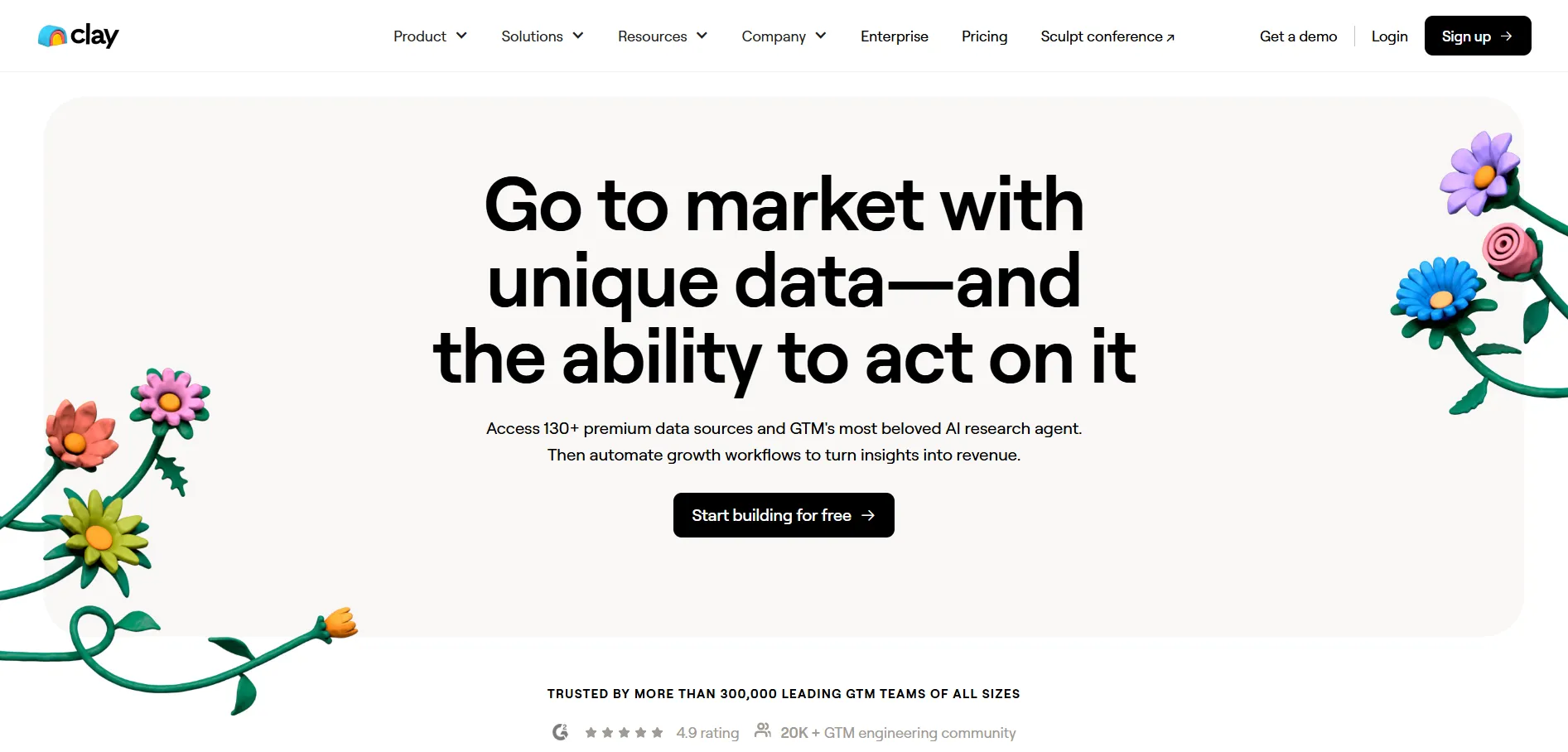
Clay is best understood as a spreadsheet that can call APIs. You drop in a list of companies or people, and Clay runs them through dozens of data providers in sequence, picking the first one that returns a good answer. This is the waterfall enrichment model: instead of trusting a single vendor for emails, phone numbers, or firmographics, Clay queries provider one, and if that comes back empty, it falls through to provider two, then three, and so on. You pay per successful lookup rather than for a fixed seat on every database.
In a sending stack, Clay's job is to make sure only valid, verified, well-scored contacts ever reach the sequencing and sending tools downstream. That matters more than it sounds: invalid addresses drive bounces, and high bounce rates are one of the fastest ways to wreck sender reputation. The enrichment-versus-enrichment comparison (Clay against ZoomInfo and Apollo's database) is covered in depth in our waterfall enrichment post, so here we treat Clay simply as the quality gate at the front of the pipeline. The cost of that flexibility is a learning curve. Clay is not something a new SDR opens and uses on day one. It rewards people who think in systems.
Apollo: database plus sequencing (the middle of the stack)
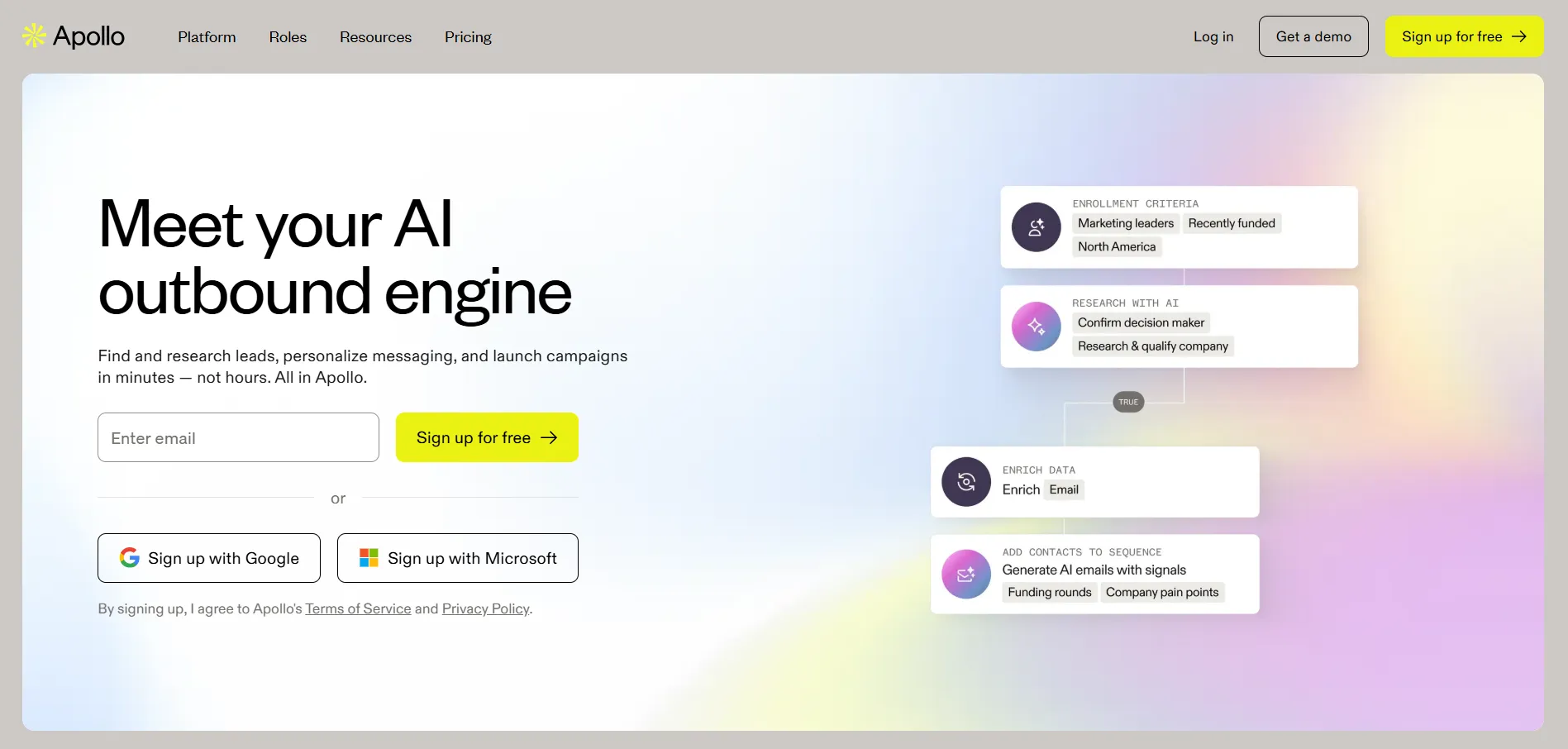
Apollo is a contact database with a sales engagement layer bolted on. It owns a large B2B contact graph, so you can build a list of, say, heads of marketing at Series B SaaS companies in North America, and then sequence them with email and LinkedIn steps inside the same tool. For a lot of teams this all-in-one nature is the entire appeal. One login, one bill, prospecting and outreach in one place.
In stack terms, Apollo is the sequencing brain: it manages cadences, follow-up logic, and multichannel steps. The trade-off is data depth and the deliverability ceiling. Apollo data is broad but accuracy varies by region and seniority, and its native email sending is fine for moderate volume but is not a dedicated deliverability engine. As a generalist it does many jobs adequately rather than one job exceptionally, which is exactly why high-volume senders hand the actual sending off to a specialist.
Instantly: cold email sending and deliverability (the end of the stack)
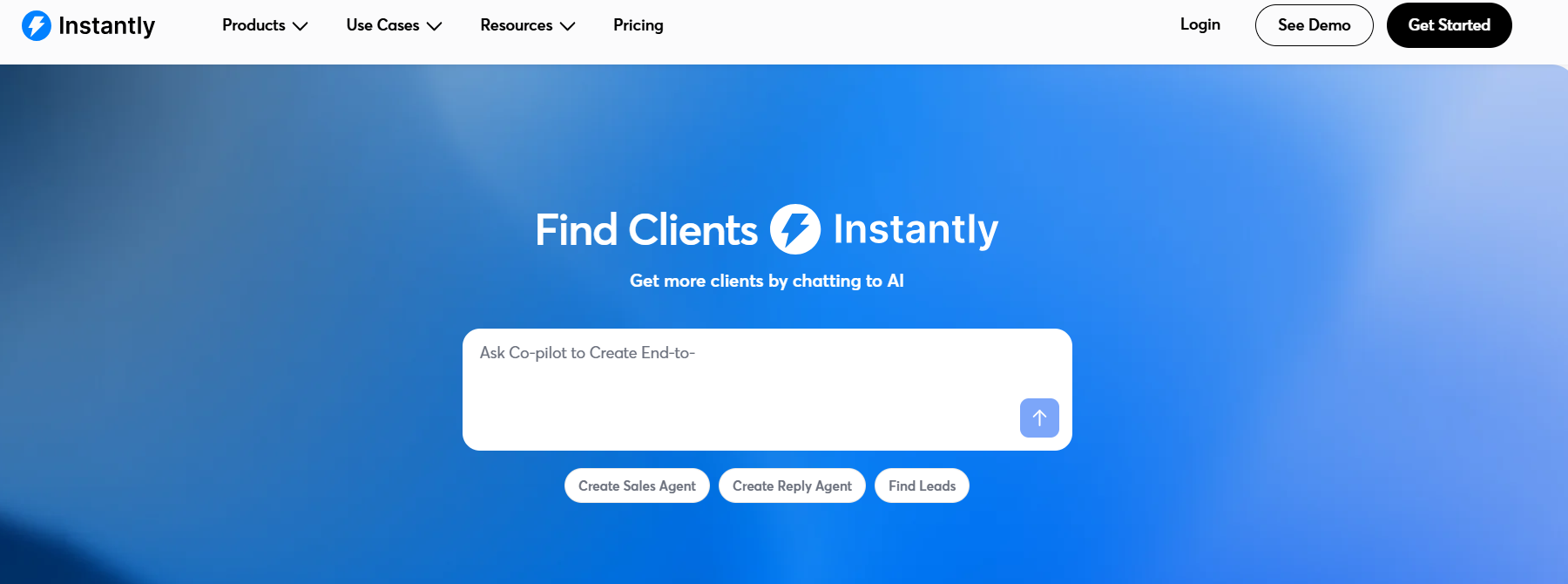
Instantly is built around one job: getting cold email into the inbox at volume. It handles inbox rotation across many sending mailboxes, warmup to build sender reputation, and the sending infrastructure that keeps you out of spam folders. If you are sending thousands of cold emails a week and your reply rate quietly collapses, the cause is almost always deliverability rather than copy, and that is exactly the problem Instantly is designed to solve.
Deliverability is also no longer optional hygiene. Since Google and Yahoo tightened bulk-sender requirements in 2024 (per Google's published email sender guidelines), authenticated sending, low spam-complaint rates, and easy unsubscribe handling are enforced thresholds rather than best practices, and a dedicated sending layer like Instantly is built to keep you under those limits. What Instantly does not do well is data. Its built-in lead database is thinner than Apollo's and far less flexible than Clay's. You bring the list, Instantly sends it. Treating it as a prospecting tool is the wrong frame.
Clay vs Apollo vs Instantly: side-by-side
Pricing reality check
Pricing for all three moves often, and the numbers below are approximate and directional, drawn from each vendor's public pricing pages and cross-checked against community-reported ranges on G2. Always check current pricing on each vendor's site before you commit.
Clay uses a usage-based credit model. There is a free tier to test workflows, and per Clay's official pricing page paid plans typically start in the low hundreds per month, scaling with the number of enrichment credits you consume. The catch is that waterfall enrichment runs multiple providers per row, so credit burn can climb faster than people expect on large lists. Budget for the volume, not the headline price.
Apollo prices per seat with a usable free tier, and according to Apollo's published pricing paid plans commonly land in the roughly fifty to one hundred twenty dollars per user per month range depending on credits and features. Because it bundles data and sequencing, the effective cost per outcome can be lower than buying a database and an outreach tool separately.
Instantly prices by sending volume and the number of connected mailboxes rather than by seat, with plans on its pricing page often starting around forty dollars a month and rising with scale. Agencies running many client accounts sit at the higher end. For pure send volume per dollar, it is usually the most economical of the three.
Strengths and weaknesses
Where Clay wins and where it hurts
Clay wins on flexibility and data quality at the top of the funnel. Nothing else matches its ability to chain providers, scrape, and apply AI logic in one place, and the waterfall approach genuinely produces higher match rates than any single source, which keeps bounce rates down once those contacts hit your sender. It hurts on complexity and cost predictability. You need someone who enjoys building systems, and credit consumption on big lists can surprise finance. If your team is two SDRs who just want to send email, Clay is overkill.
Where Apollo wins and where it hurts
Apollo wins on convenience and value. One tool covers list building and outreach, the free tier is genuinely useful, and the learning curve is gentle. It hurts on ceiling. Data accuracy is inconsistent for senior titles and outside major markets, and as you scale cold email volume you will eventually outgrow its native sending and want a dedicated deliverability layer underneath it.
Where Instantly wins and where it hurts
Instantly wins on deliverability and cost per send. Inbox rotation and warmup are the difference between campaigns that reach inboxes and campaigns that quietly die in spam; Instantly's own 2026 deliverability benchmark data consistently shows multi-mailbox rotation outperforming single-inbox sending on inbox-placement rates. It hurts on everything that is not sending. Weak data, limited multichannel, and a workflow that assumes you have already sourced and enriched your list elsewhere.
How to wire the three into one stack
The practical pattern most mature outbound teams converge on is a clean hand-off between the three layers. Clay enriches, verifies, and scores the raw list so only deliverable, in-ICP contacts move forward. Apollo (or your CRM) holds the sequence logic and any multichannel steps. Instantly carries the actual cold-email volume across rotated, warmed mailboxes so reputation stays intact. Data flows one direction: enrich, then sequence, then send. Get that order right and each tool reinforces the next instead of duplicating it.
Which should you pick by use case
Use these as starting points, not rules.
Lean startup, first outbound motion
Start with Apollo. One tool, low cost, decent data, and built-in sequencing get you sending in a day. Add the others when you hit a wall.
Agency or high-volume sender
Instantly is non-negotiable for the sending layer. Pair it with a data source for lists. This is the classic two-tool stack, and the deliverability headroom is what lets agencies run many client domains at once.
RevOps or GTM engineering team
Clay is the front of the pipeline. Use it to enrich and score, then push clean records into Apollo for sequencing or directly into Instantly for sending. Clean data upstream is what protects deliverability downstream. The enrichment-tool-versus-enrichment-tool decision itself is covered in the waterfall enrichment comparison.
Mid-market team scaling outbound
Run all three as a stack. Clay enriches and routes, Apollo covers gaps and multichannel sequences, Instantly handles cold email at volume. The tools complement rather than compete.
The honest takeaway
The Clay vs Apollo vs Instantly debate frames these as rivals when they are closer to teammates in one sending pipeline. Clay finds and cleans the data. Apollo gives you a sequencing home. Instantly makes sure the email actually arrives. If you only remember one thing: match the tool to your actual bottleneck. Data problem, buy Clay. All-in-one starter, buy Apollo. Deliverability problem, buy Instantly. When two of those are true at once, that is your signal to combine them into a stack rather than to keep shopping for a single winner.
For the enrichment-only deep dive, which data layer wins on coverage and match rate, see our breakdown of waterfall enrichment with Clay vs ZoomInfo vs Apollo. If you are weighing Apollo as your primary database, compare it in our Apollo.io vs DevCommX comparison. And if the sending layer is your real question, read Instantly vs Smartlead vs Lemlist.
Build This With DevCommX
DevCommX builds autonomous, signal-based AI SDR systems for B2B teams — and you own the infrastructure, not just a managed campaign. Clients typically go from setup to 40+ qualified demos within 6 weeks, because the system triggers on real buying signals instead of static lists. Book a GTM strategy call to map this to your pipeline.
Further Reading
FAQ
Is Clay a replacement for Apollo?
No. Clay is an enrichment and orchestration layer, while Apollo is a contact database with sequencing. Many teams use Clay to enrich and verify data that may originate partly from Apollo, then route it onward. They solve different problems.
Can Instantly find leads for me?
Only to a limited degree. Instantly has a basic lead database, but its strength is sending and deliverability. For serious list building you should source data from Apollo, Clay, or another provider and bring it into Instantly to send.
What is waterfall enrichment and why does it matter?
Waterfall enrichment queries multiple data providers in sequence, taking the first valid result for each contact. It matters because no single vendor has complete or accurate coverage, so falling through several sources produces higher match rates and better data quality than relying on one database. Clay popularized this approach. For the full enrichment-tool comparison, see our waterfall enrichment post.
Which tool is cheapest?
It depends on usage, and all pricing is approximate, so check current pricing. Instantly is usually most economical for raw send volume since it prices by mailboxes rather than seats. Apollo offers strong value as an all-in-one with a useful free tier. Clay can become the most expensive at scale because waterfall enrichment consumes credits per provider, per row.
Do I really need all three tools?
Not to start. A lean team can begin with just Apollo, or an agency with just Instantly plus a data source. You add tools as you hit specific bottlenecks. Mature outbound teams often run all three as a stack because each owns a distinct part of the workflow.
Which should a RevOps team prioritize?
Clay, in most cases. RevOps and GTM engineering teams benefit most from its custom enrichment, scoring, and routing logic, which improves data quality across every downstream tool. Apollo and Instantly then become execution layers fed by clean Clay data.
Planning your next GTM move? Get a quick audit of your sales, outbound, and RevOps systems.
More Blogs












.webp)


















Book Your Free GTM Audit
Replace manual prospecting with intelligent automation.
Let your sales team focus on closing.