The best Clay alternatives for 2026 are Apollo, Clearbit (now Breeze Intelligence inside HubSpot), Cognism, Persana AI, La Growth Machine, and Ocean.io, plus working with a specialist agency that runs Clay for you. Clay is a remarkable waterfall-enrichment and automation platform, but many revenue teams find it too complex to operate and too unpredictable on credit costs. If you want cleaner contact data and signal-based prospecting without a full-time operator learning curve, a focused alternative will usually get you to value faster. This guide breaks down each option by what it does best, how steep the learning curve is, and roughly what it costs, so you can match a tool to your actual go-to-market motion.
We say this as a team that runs Clay every day for clients. Clay is the most flexible enrichment layer on the market, and for some teams it is absolutely the right choice. But "most flexible" and "right for you" are not the same sentence. Below is a fair, practical look at where Clay shines, where it frustrates, and which alternative tends to win for each kind of buyer.
Why Teams Look for Clay alternatives
Clay's reputation is well earned. It chains dozens of data providers into a single waterfall, so when one source lacks an email or phone number, the next provider fills the gap. Layer in AI research agents and native automation, and you can build prospecting workflows that would otherwise need a developer. That power is exactly why people leave, too. Three patterns come up again and again.
The learning curve is real
Clay behaves like a spreadsheet crossed with a no-code automation tool. Tables, enrichment columns, conditional logic, formulas, and HTTP calls all live in one canvas. A capable RevOps person can learn it, but "learn it" often means weeks, not an afternoon. Teams without a dedicated operator frequently buy Clay, build two workflows, and then stall. Research on technology adoption from sources like Gartner has long noted that tool complexity is one of the leading causes of low software utilization, and Clay sits at the complex end of the enrichment spectrum.
Credit costs are hard to predict
Clay prices on credits, and every enrichment column consumes them. A waterfall that hits five providers to find one email can burn credits fast, and it is genuinely difficult to forecast your monthly spend before you build the workflow. Teams that love Clay's results sometimes still leave because finance cannot get a stable number. If predictable per-seat or per-record pricing matters more than maximum coverage, a simpler tool often wins.
You may only need part of what Clay does
Many teams adopt Clay for one job: better emails and phone numbers, or a clean list of accounts matching their ideal customer profile. Clay can do far more, but you are paying for a platform when you needed a feature. A point solution that does that one job well is usually cheaper and faster to operate. For a deeper look at how Clay's enrichment and integrations actually work under the hood, see our Clay data enrichment fields and integrations guide.
The 7 best Clay alternatives for 2026
Here is the shortlist, grouped by the kind of buyer each one serves. Pricing below is approximate and changes often, so treat every figure as a starting point and check current pricing on each vendor's site before you commit.
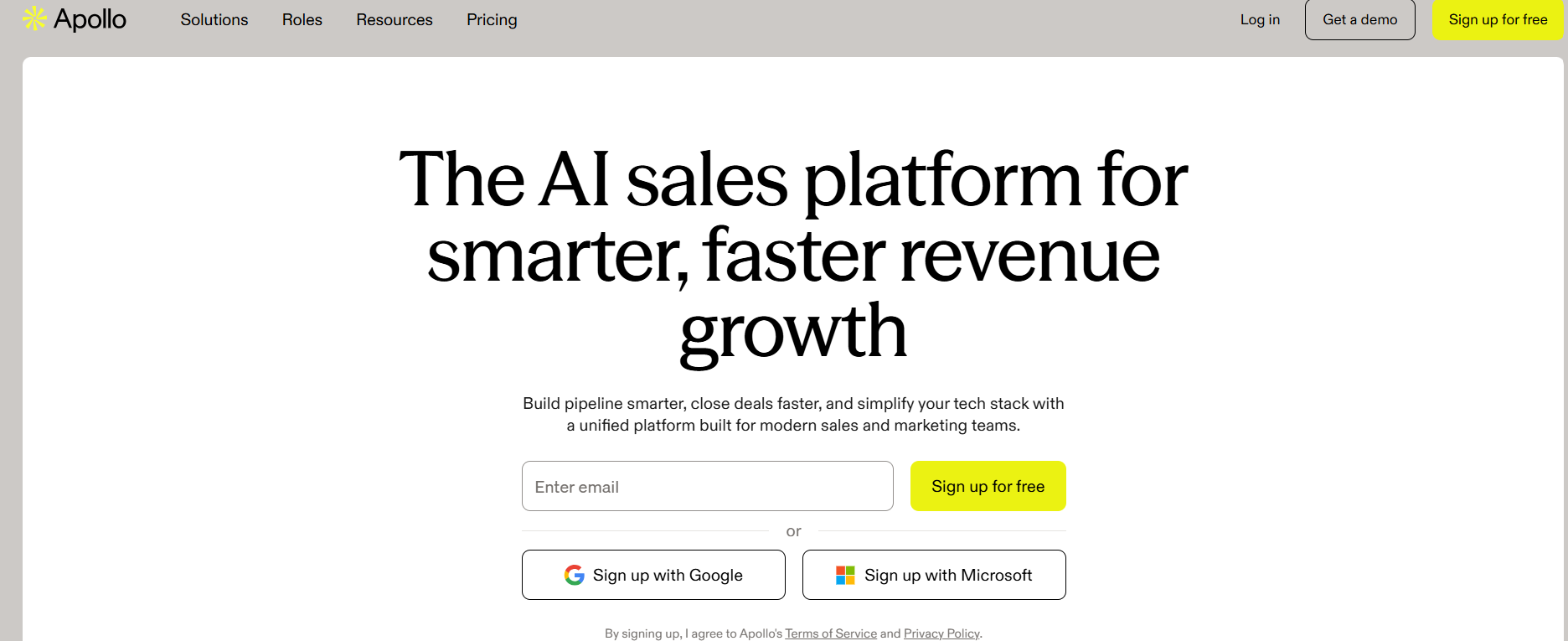
1. Apollo.io — best all-in-one for SMB and mid-market
Apollo combines a large B2B contact database with enrichment, sequencing, and a built-in dialer. For teams that want prospecting data and outreach in one place, it removes the need to stitch a database to a separate sending tool. Apollo reports a database in the hundreds of millions of contacts, and its self-serve plans make it easy to start. The data is broad rather than surgically precise, and heavy senders should watch deliverability, but the value-to-price ratio is hard to beat. Approximate pricing: a free tier exists, with paid plans commonly starting around 49 dollars per user per month. If you are weighing this matchup specifically, our Clay vs Apollo vs Instantly comparison for 2026 goes deeper on enrichment quality and sending.
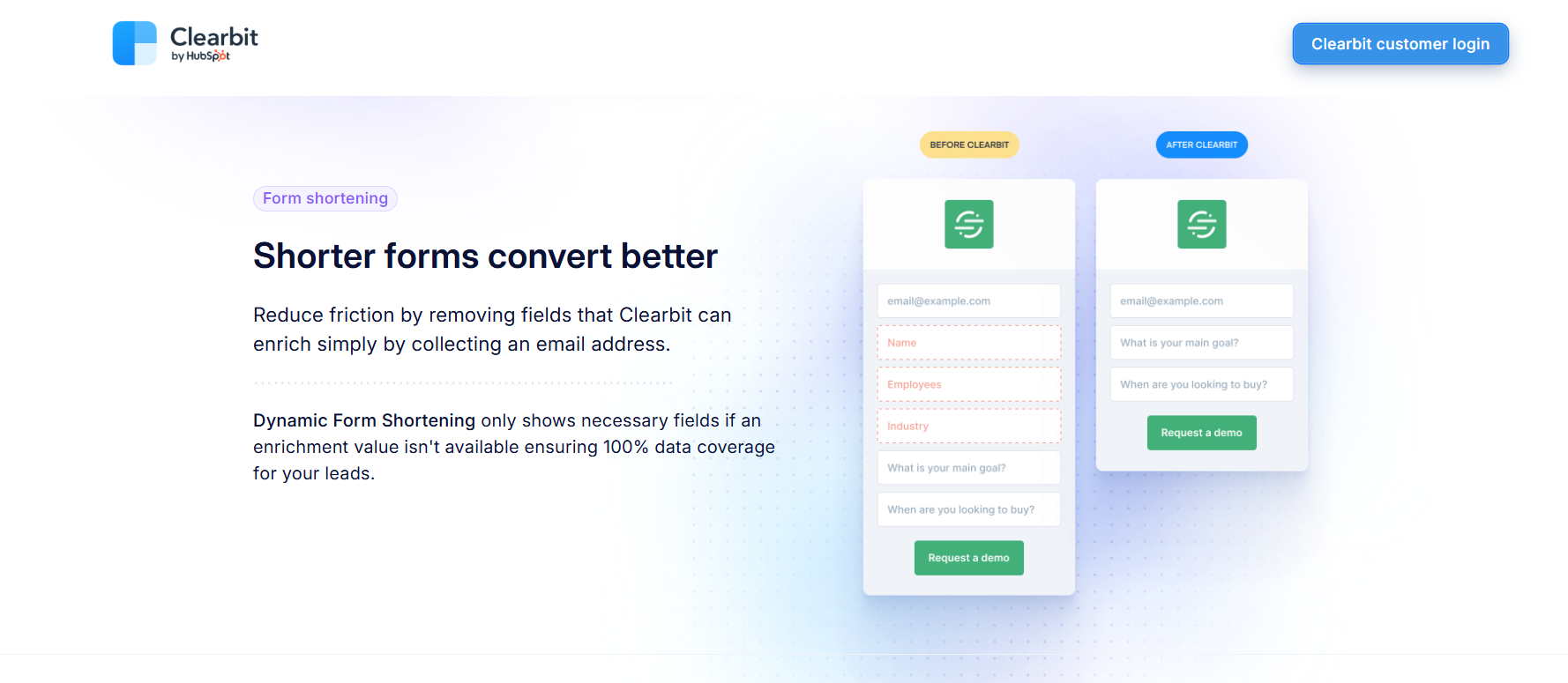
2. Clearbit, now Breeze Intelligence — best for HubSpot-native teams
Clearbit was acquired by HubSpot and now powers Breeze Intelligence, HubSpot's native enrichment layer. If your CRM is HubSpot, this is the path of least resistance: company and contact records enrich automatically, and form shortening and buyer-intent signals are built into the workflows your team already uses. The trade-off is lock-in. Outside the HubSpot ecosystem the value drops sharply. Pricing is typically credit-based and added onto a HubSpot subscription, so factor the platform cost into your math.
3. Cognism — best for compliant phone data in EMEA
Cognism is known for phone-verified mobile numbers and a strong compliance posture, including GDPR-aligned processing and Diamond Data, its human-verified mobile dataset. For teams that live on the phone, especially across the UK and Europe, connect rates can justify the premium. Cognism sells on annual contracts rather than self-serve credits, so it is a deliberate commitment. Pricing is quote-based and sits at the enterprise end; expect a sales conversation rather than a checkout page.
4. Persana AI — best Clay-like flexibility with a gentler ramp
Persana positions itself as an AI-first enrichment and prospecting platform, with waterfall-style enrichment and AI agents that feel familiar to Clay users but aim for a faster setup. It is a strong middle ground if you want automation and multiple data sources without building everything from scratch. As a newer entrant, the provider network and ecosystem are smaller than Clay's, so validate coverage for your specific segments. Approximate pricing: paid plans commonly start in the range of 85 dollars per month, with credit-based usage above that.
5. La Growth Machine — best for multichannel outbound sequencing
La Growth Machine is less a pure database and more a multichannel outbound engine, combining LinkedIn, email, and other touches with light enrichment built in. If your bottleneck is running coordinated sequences across channels rather than sourcing raw data, it fits well, and it pairs nicely with a dedicated database tool. Approximate pricing: paid plans commonly start around 50 to 60 euros per user per month depending on tier.
6. Ocean.io — best for lookalike account discovery
Ocean.io specializes in finding companies that look like your best customers. Feed it a list of strong accounts and it surfaces lookalikes using firmographic and technographic signals, which makes it valuable for account-based teams building target lists rather than chasing individual contacts. It is a discovery and list-building tool, not a full enrichment-plus-outreach suite, so plan to pair it with a sending stack. Pricing is typically quote-based; request current pricing for your seat count.
7. Done-for-you Clay via a specialist agency — best when you want Clay's power without the operator
If Clay's output is what you want but the operating overhead is the problem, the seventh option is not a different tool at all. It is having a specialist team run Clay for you. You get waterfall enrichment, signal-based triggers, and AI research without hiring and training an in-house operator, and you sidestep the credit-forecasting headache because the agency manages spend. The honest caveat: you are dependent on a partner, so choose one that builds infrastructure you own rather than a black box you rent.
Clay alternatives compared at a glance
Pricing reflects publicly listed approximate figures at the time of writing and changes frequently. Always confirm current pricing and seat minimums directly with each vendor.
How to choose the right Clay alternative
Start with your bottleneck, not the feature list. If raw contact data is the gap and you want sending in the same tool, Apollo is the pragmatic default. If you live inside HubSpot, Breeze Intelligence removes integration work entirely. If phone connect rates in Europe make or break your quarter, Cognism's verified mobiles earn their premium. If you want Clay-style automation with a shorter ramp, Persana is the closest analog. If the problem is orchestrating multichannel sequences, La Growth Machine fits. And if account selection is the hard part, Ocean.io's lookalikes are purpose-built for that.
Watch the total cost, not the sticker price
Credit-based tools, including Clay, can look cheap on the plan page and expensive in practice once you run real volume. Per-seat tools are easier to forecast but can get pricey as the team grows. Map your monthly record volume against each pricing model before you decide. Data accuracy compounds here too: industry analyses from firms like Dun and Bradstreet have repeatedly highlighted that B2B contact data decays at a meaningful rate each year, so the cost of re-enrichment is a recurring line item, not a one-time setup.
Factor in who will operate it
The most powerful tool is worthless if no one drives it. Be honest about whether you have a RevOps owner with time to learn a complex platform. If you do not, a simpler tool or a done-for-you arrangement will deliver more pipeline than a powerful tool gathering dust. To understand exactly what you would be paying for if you stayed on Clay, our Clay pricing breakdown lays out the credit math in detail.
When Clay is still the right call
This roundup is about alternatives, but the fair answer is that Clay remains the best choice for a specific buyer. If you have a dedicated operator who enjoys building, if you need maximum email and phone coverage from a deep waterfall, and if you want to chain custom signals, AI research, and CRM writes into one automated system, nothing else matches its ceiling. Teams running sophisticated, signal-based outbound at scale often find no real substitute. The question is not whether Clay is good. It plainly is. The question is whether its power maps to your team's capacity and your finance team's tolerance for variable spend. If yes, stay. If not, one of the seven options above will likely serve you better.
Build This With DevCommX
DevCommX builds autonomous, signal-based AI SDR systems for B2B teams - and you own the infrastructure, not just a managed campaign. Clients typically go from setup to 40+ qualified demos within 6 weeks, because the system triggers on real buying signals instead of static lists. Book a GTM strategy call to map this to your pipeline.
FAQ
What is the best free Clay alternative?
Apollo.io is the most popular free Clay alternative. Its free tier includes access to a large contact database plus basic sequencing, so small teams can prospect and send from one tool without paying upfront. Coverage and credit limits apply, and data is broad rather than surgical, but for getting started at zero cost it is the strongest option on this list.
Is there a cheaper alternative to Clay?
Yes. Per-seat tools like Apollo and La Growth Machine are usually cheaper and far more predictable than Clay's credit-based model, which can spike with high-volume waterfalls. The right answer depends on volume: map your monthly record count against each pricing model, because a low sticker price can still cost more once real enrichment usage is factored in.
Clay vs Apollo: which is better for enrichment?
Clay offers deeper, more flexible waterfall enrichment by chaining many providers, which yields higher coverage but demands setup and credit management. Apollo offers solid enrichment from its own database with far less complexity and built-in outreach. Choose Clay for maximum coverage and custom automation; choose Apollo for speed, simplicity, and an all-in-one workflow at a predictable price.
What is a good GTM enrichment tool for HubSpot users?
For HubSpot-native teams, Breeze Intelligence, the successor to Clearbit, is the most seamless GTM enrichment tool. It enriches company and contact records automatically inside HubSpot and feeds buyer-intent signals into existing workflows, removing integration effort. The trade-off is ecosystem lock-in, so it makes most sense if HubSpot is your long-term CRM commitment.
Do I still need Clay if I hire an agency?
If you work with a specialist agency, you still use Clay, but you do not have to operate it. The agency runs the waterfalls, signals, and automations and manages credit spend, so you get Clay's output without the learning curve or the in-house hire. Choose a partner that builds infrastructure you own rather than a closed system you cannot take with you.
How accurate is B2B contact data from these tools?
Accuracy varies by vendor and region, and all B2B data decays over time as people change roles. Phone-focused providers like Cognism emphasize verified mobiles for higher connect rates, while broad databases trade some precision for scale. Treat enrichment as ongoing rather than one-time, and budget for periodic re-enrichment to keep your records usable.
References













.webp)